A contemporary book redesign that uses typography and layout to reimagine a classic narrative in a visually expressive format.
Project Overview
This project is a modern redesign of Rudyard Kipling's The Elephant’s Child. The story follows a young elephant whose endless curiosity leads him to the crocodile and ultimately explains how elephants came to have trunks. My goal was to redesign the book as a playful, child-centered reading experience that uses typography, character design, pattern, and pacing to visually express the main theme: curiosity.
Design Concept: Curiosity as a Visual Language
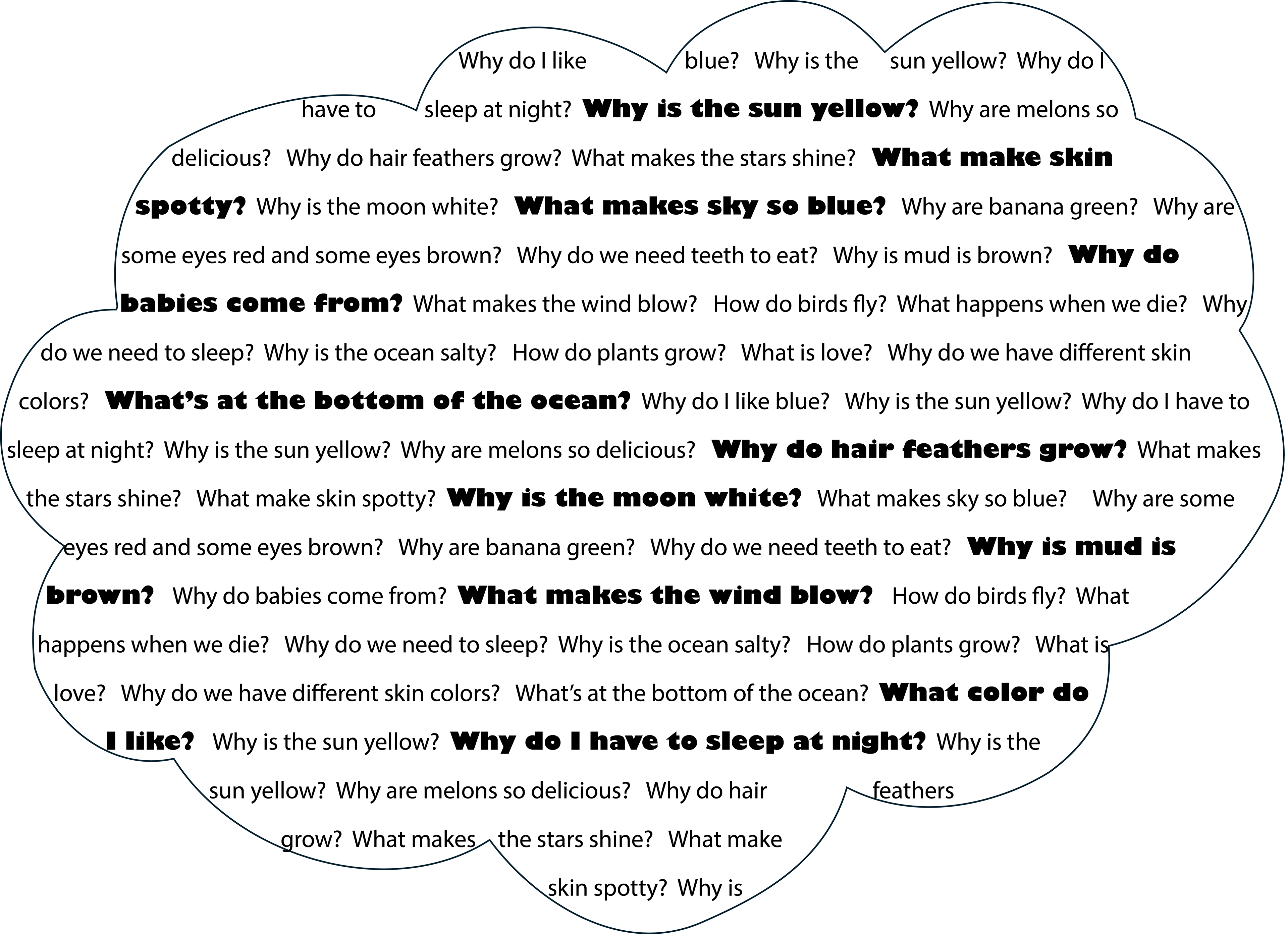
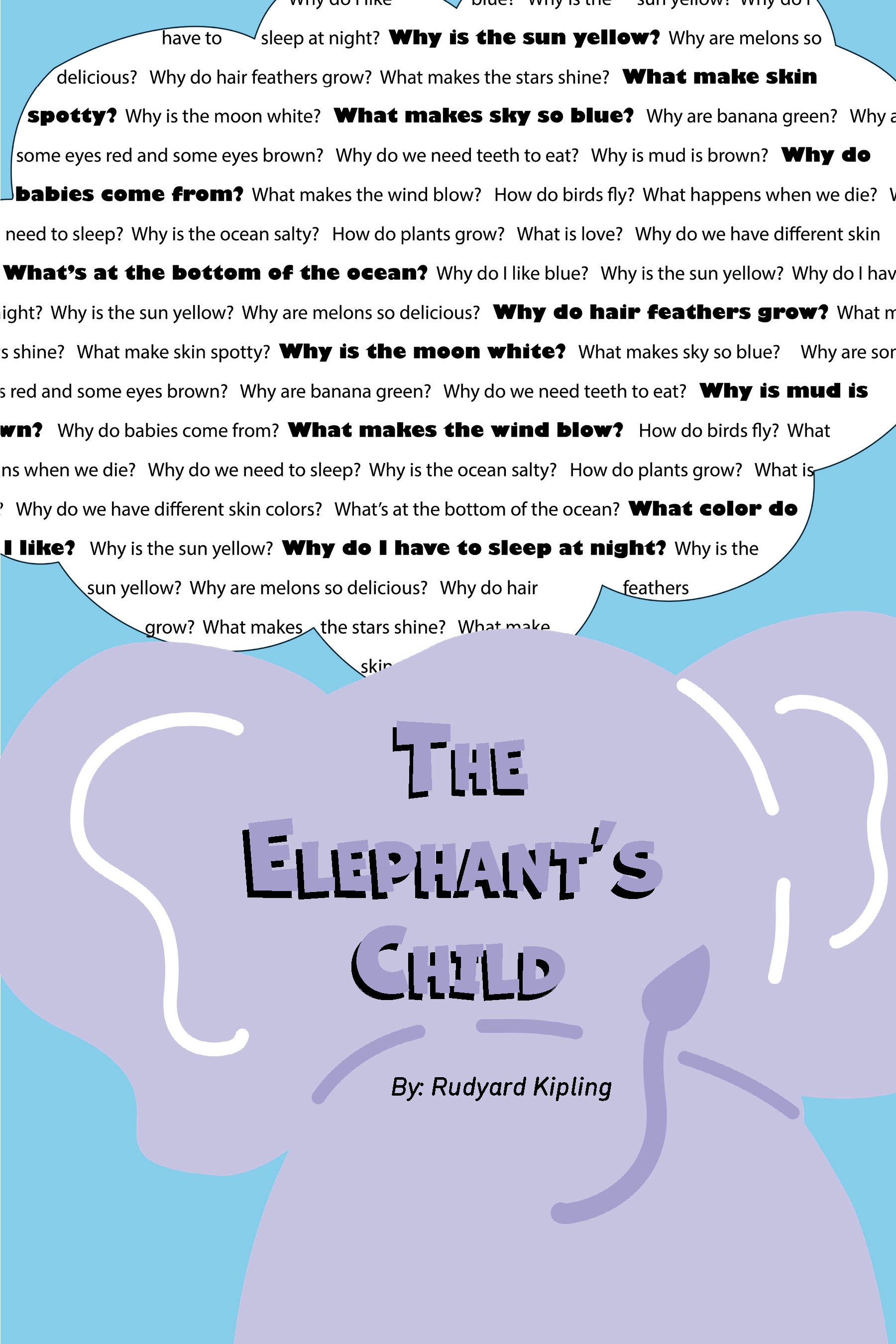
The central design idea was to turn curiosity into a visual system. Since the Elephant’s Child is constantly asking questions, I used repeated question-based typography, cloud shapes, and layered visual motifs to represent the way questions fill his mind. The design connects directly to the book's message:
never stop asking questions
Mood Exploration
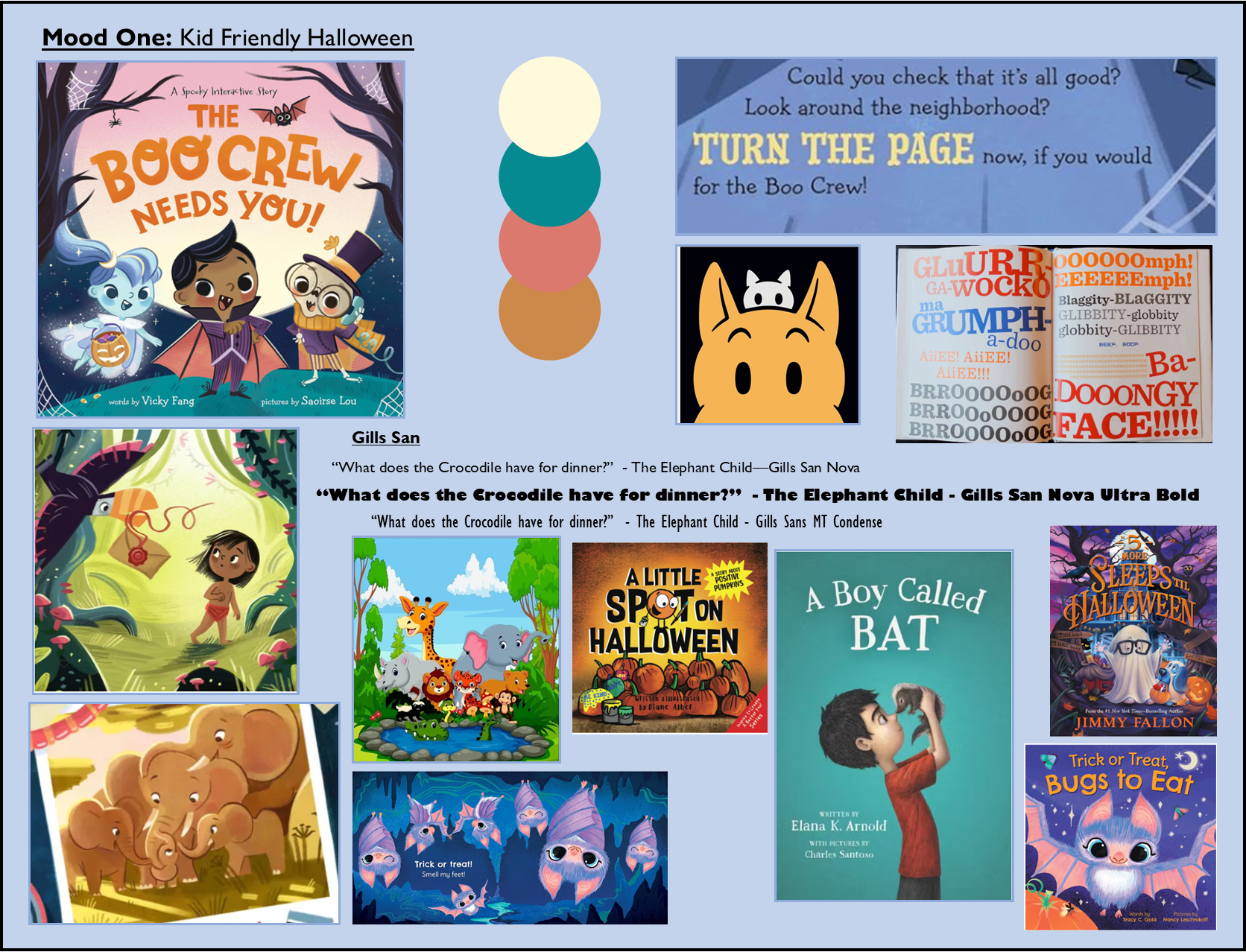
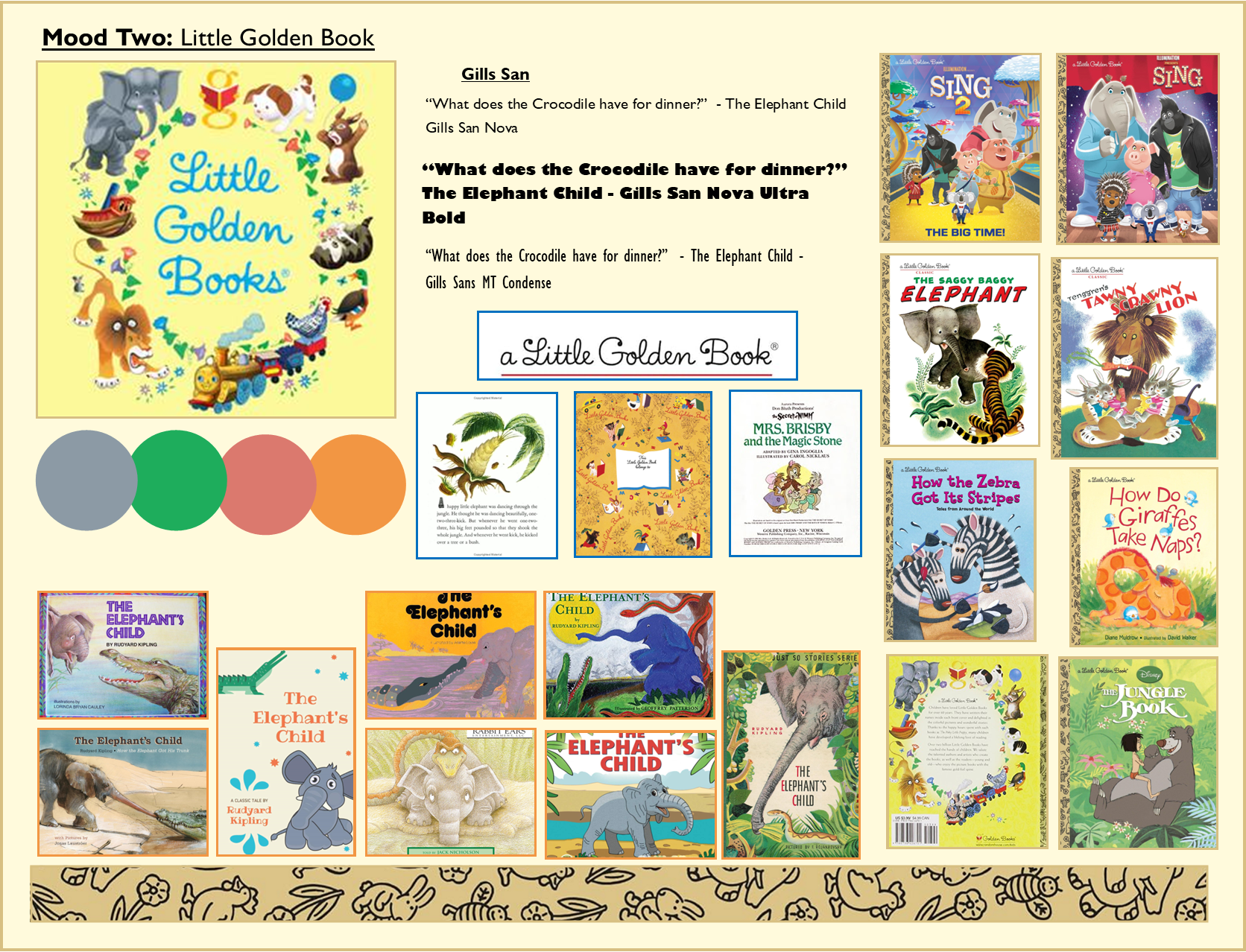
I explored two main visual directions before developing the final design. The first direction, Kid-Friendly Halloween, used bold colors, playful energy, and expressive typography to create a more dramatic tone. The second direction, Little Golden Book Influence, focused on warmth, nostalgia, framed compositions, and soft storybook visuals. The final design combines the accessibility of classic children’s books with a more modern, playful visual style.
Typography Development
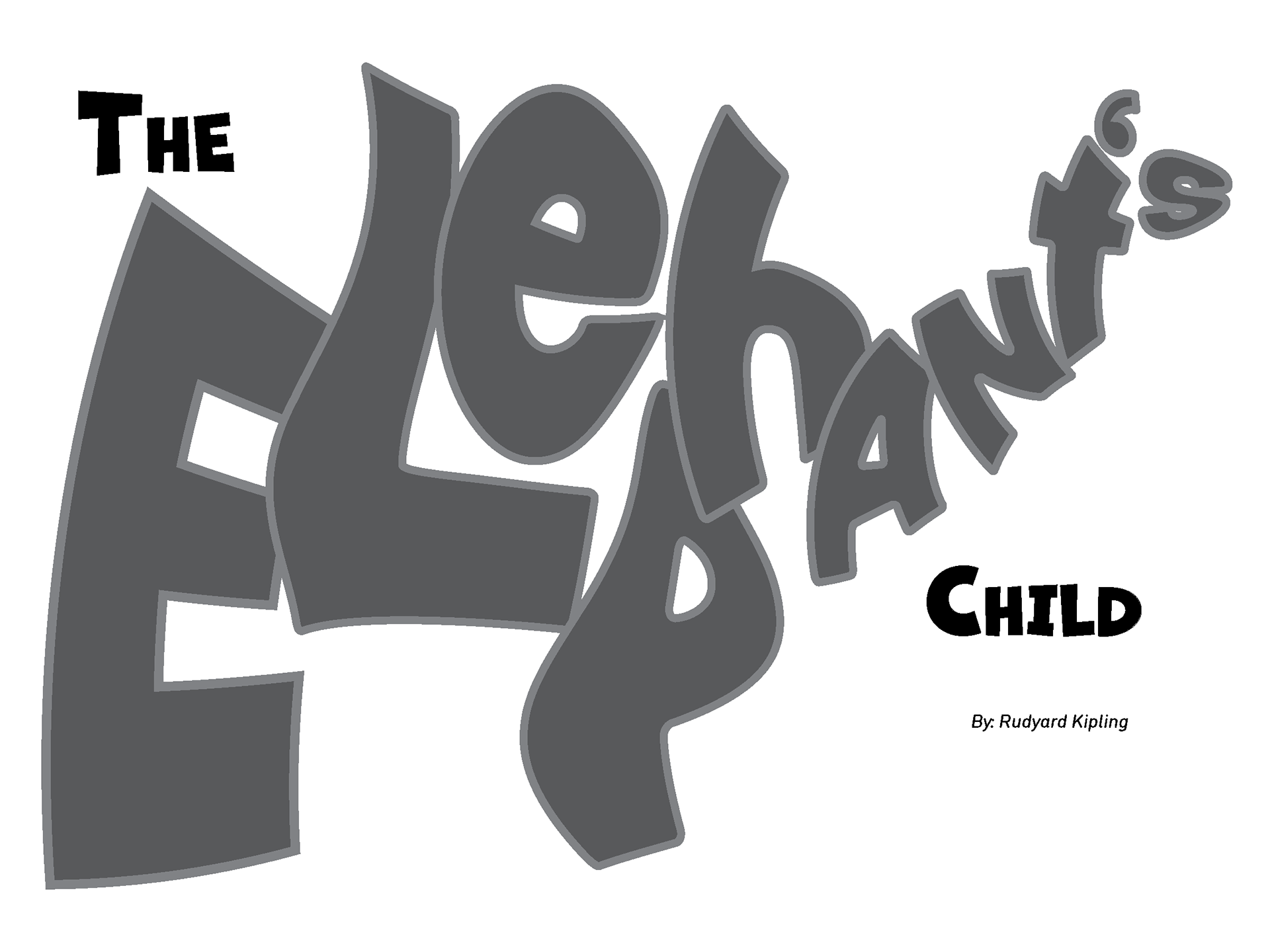
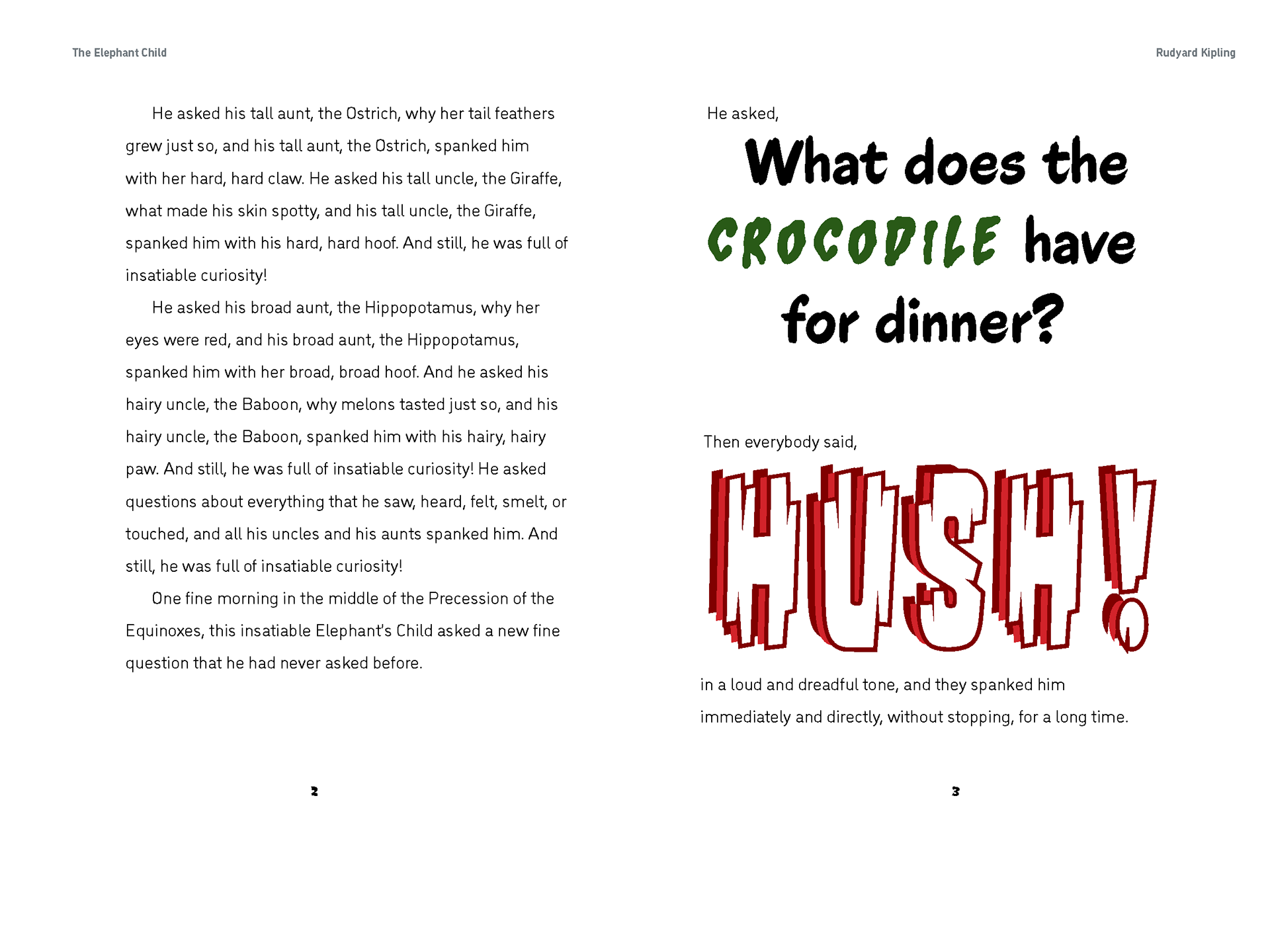
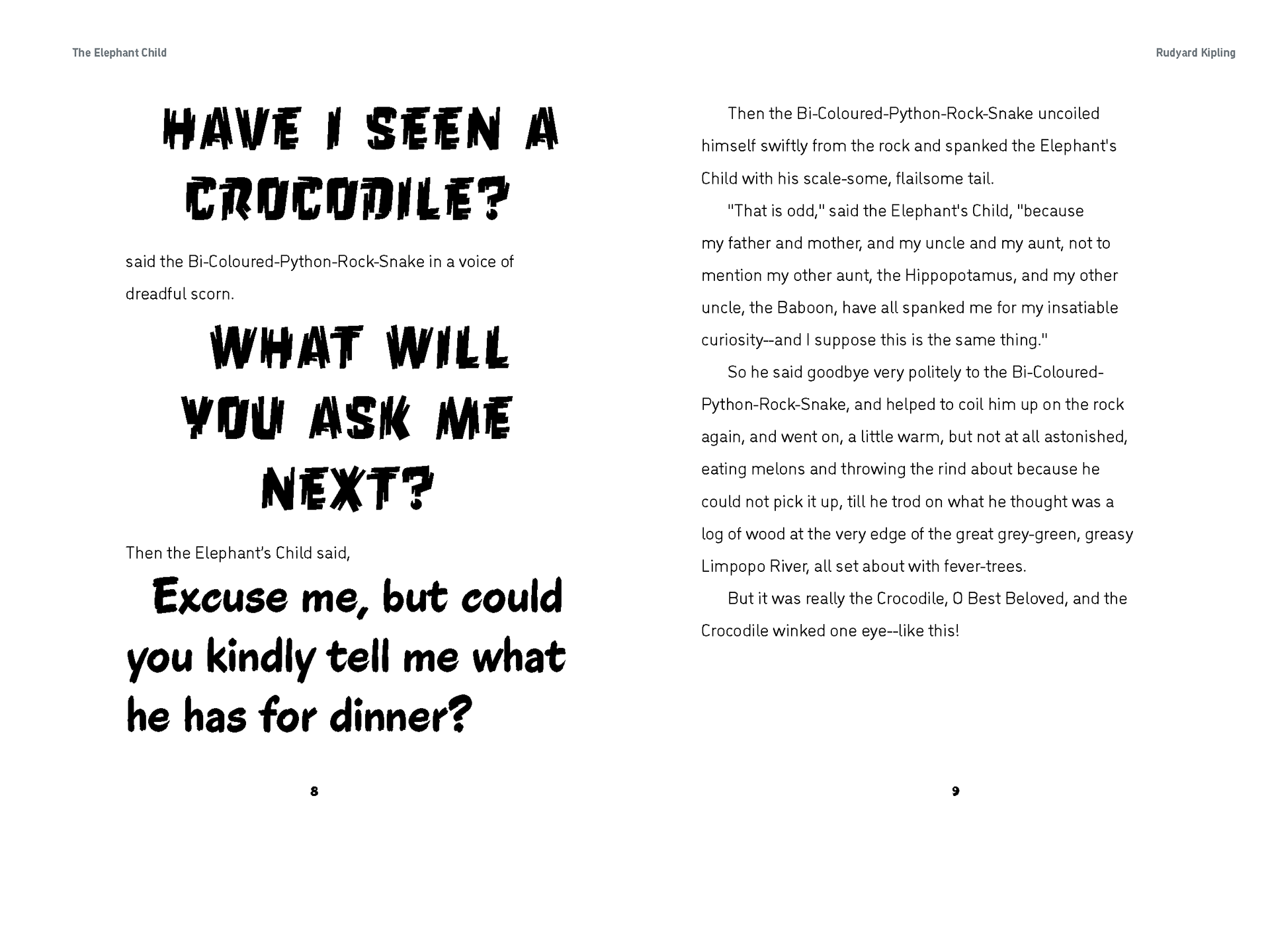
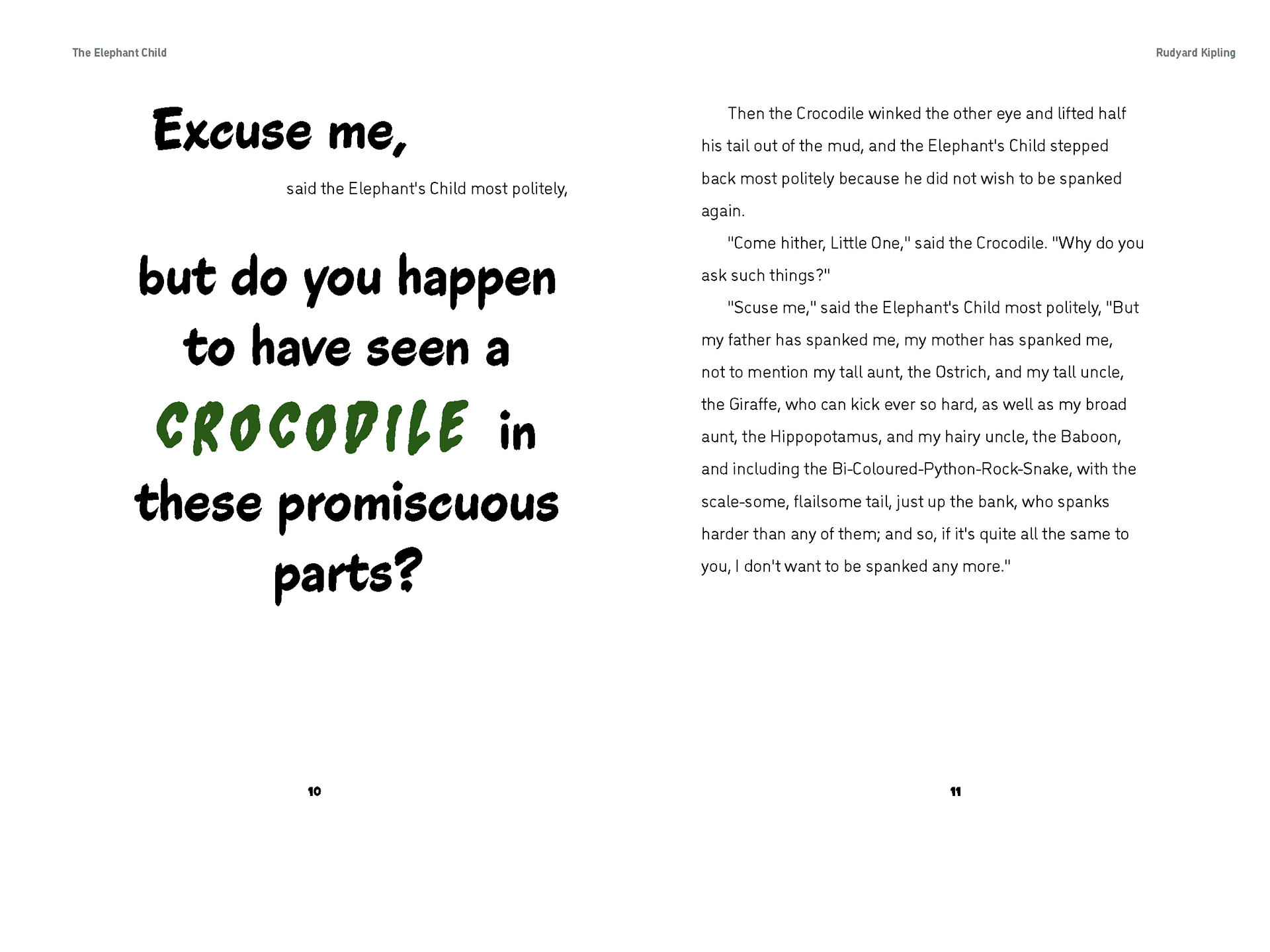
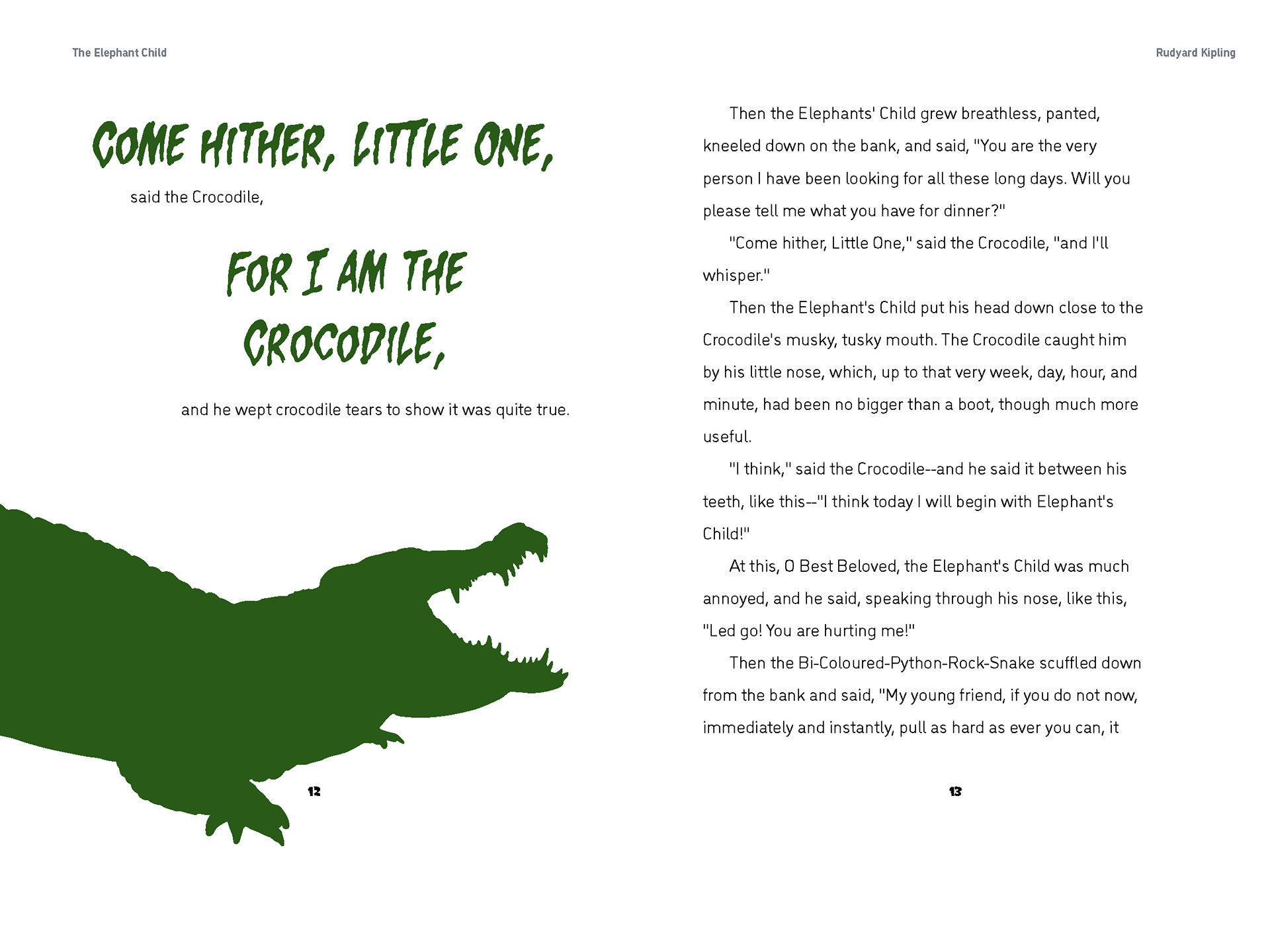
Typography became one of the most important storytelling tools in the redesign. Early versions used more traditional text layouts, but later versions introduced larger scale shifts, bold display type, and expressive word treatments. Words like “HUSH!” and “CROCODILE” became visual moments rather than plain text, helping young readers feel the story's sound, emotion, and tension.

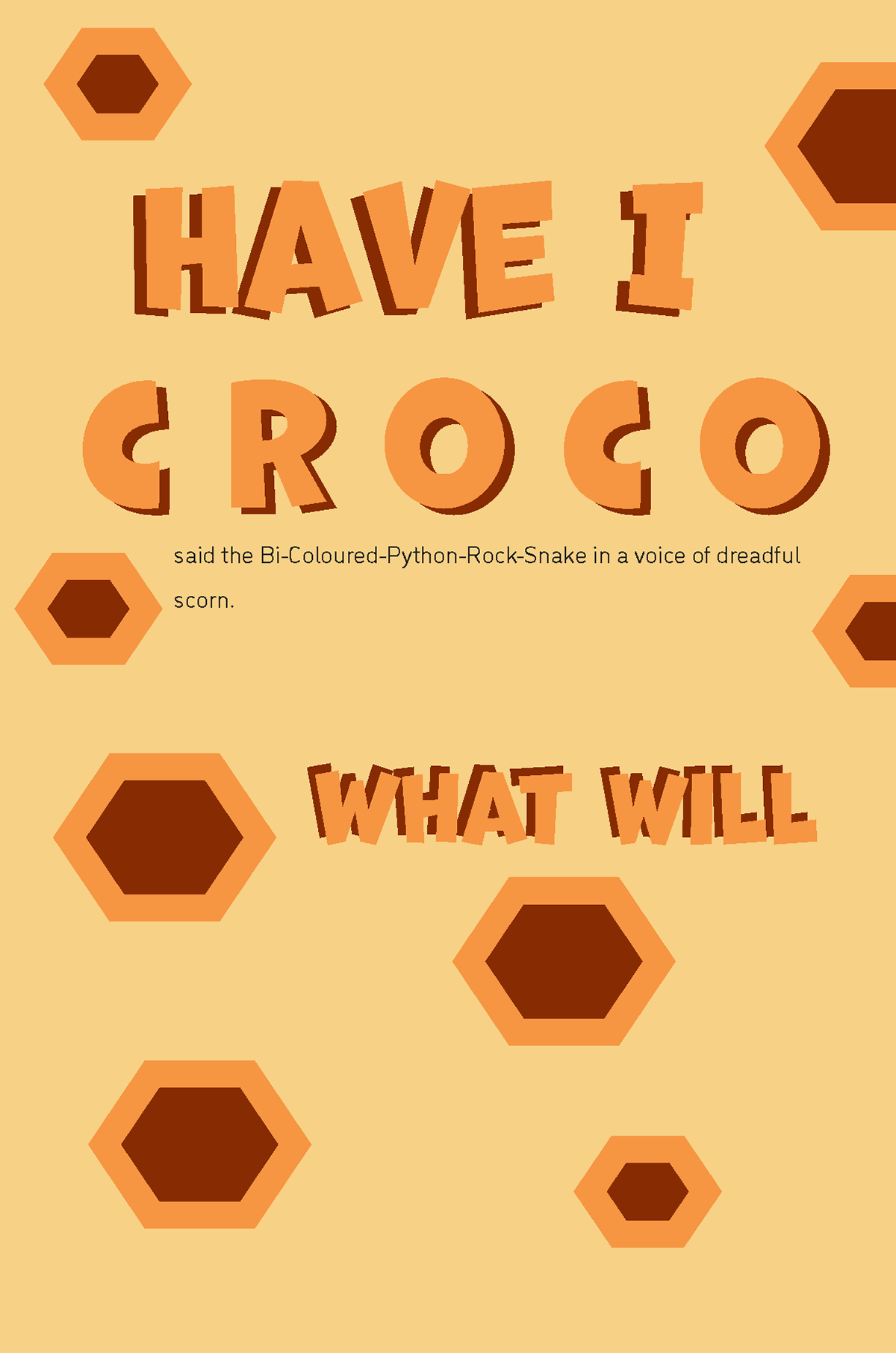
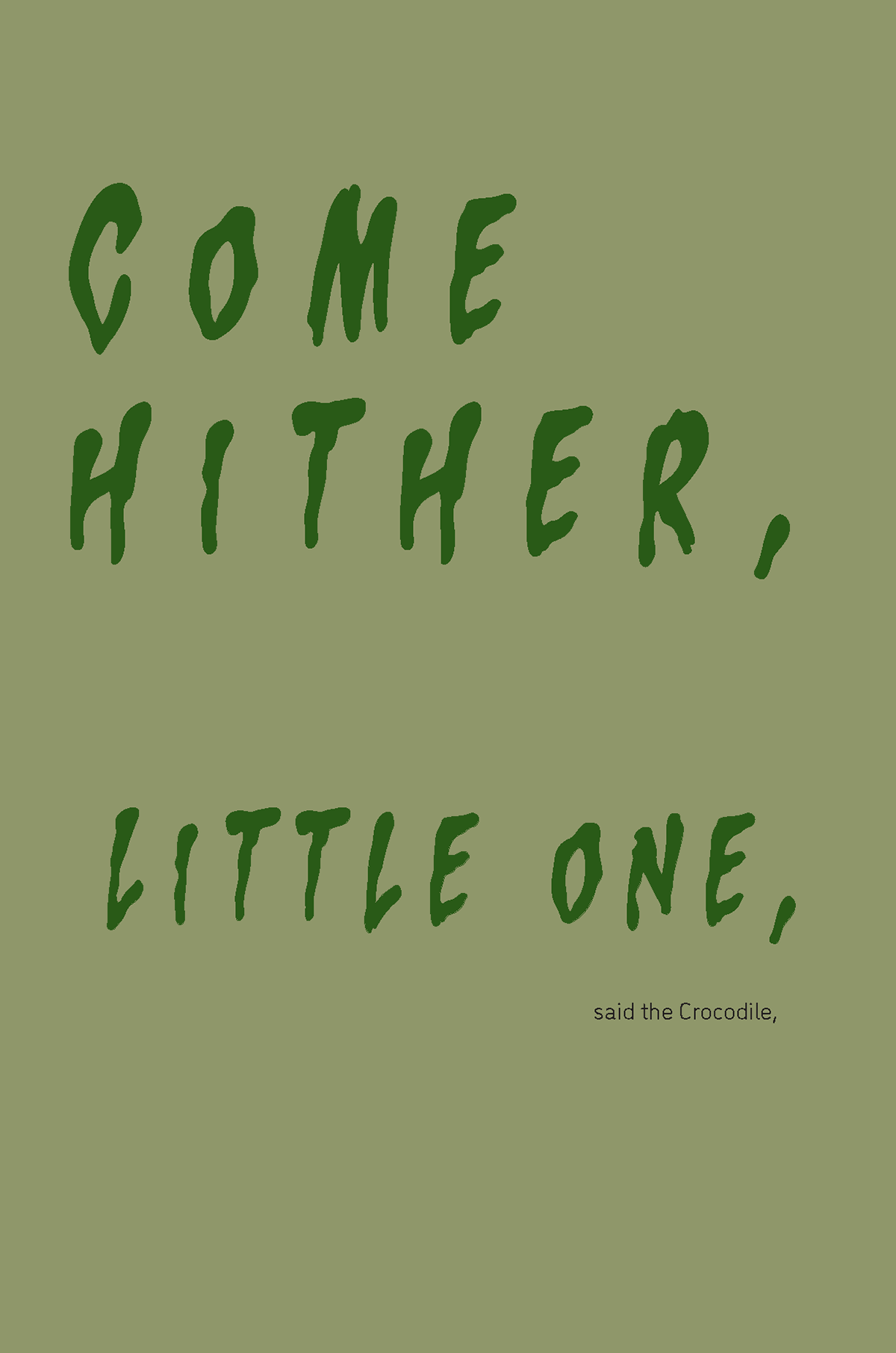
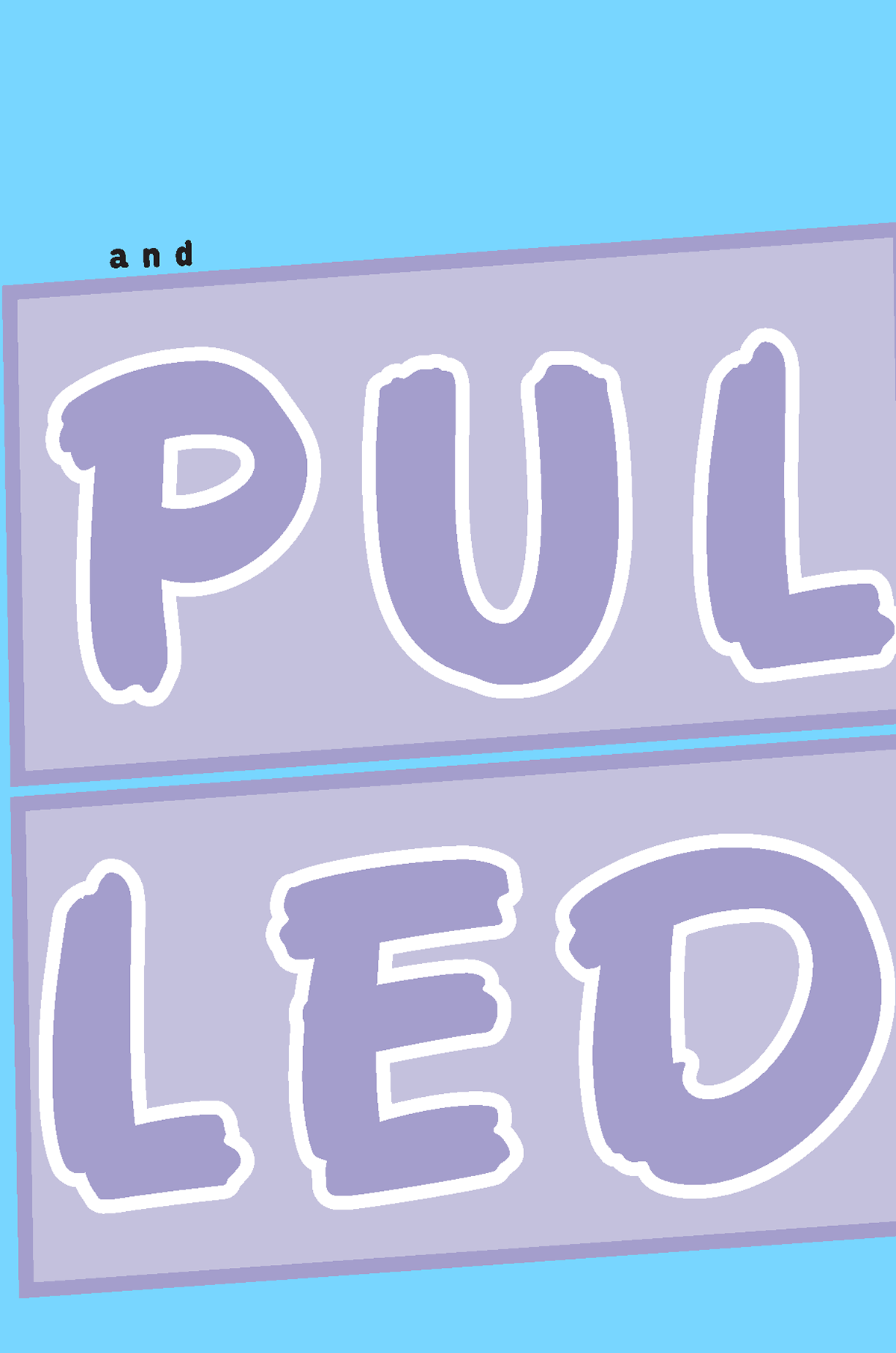
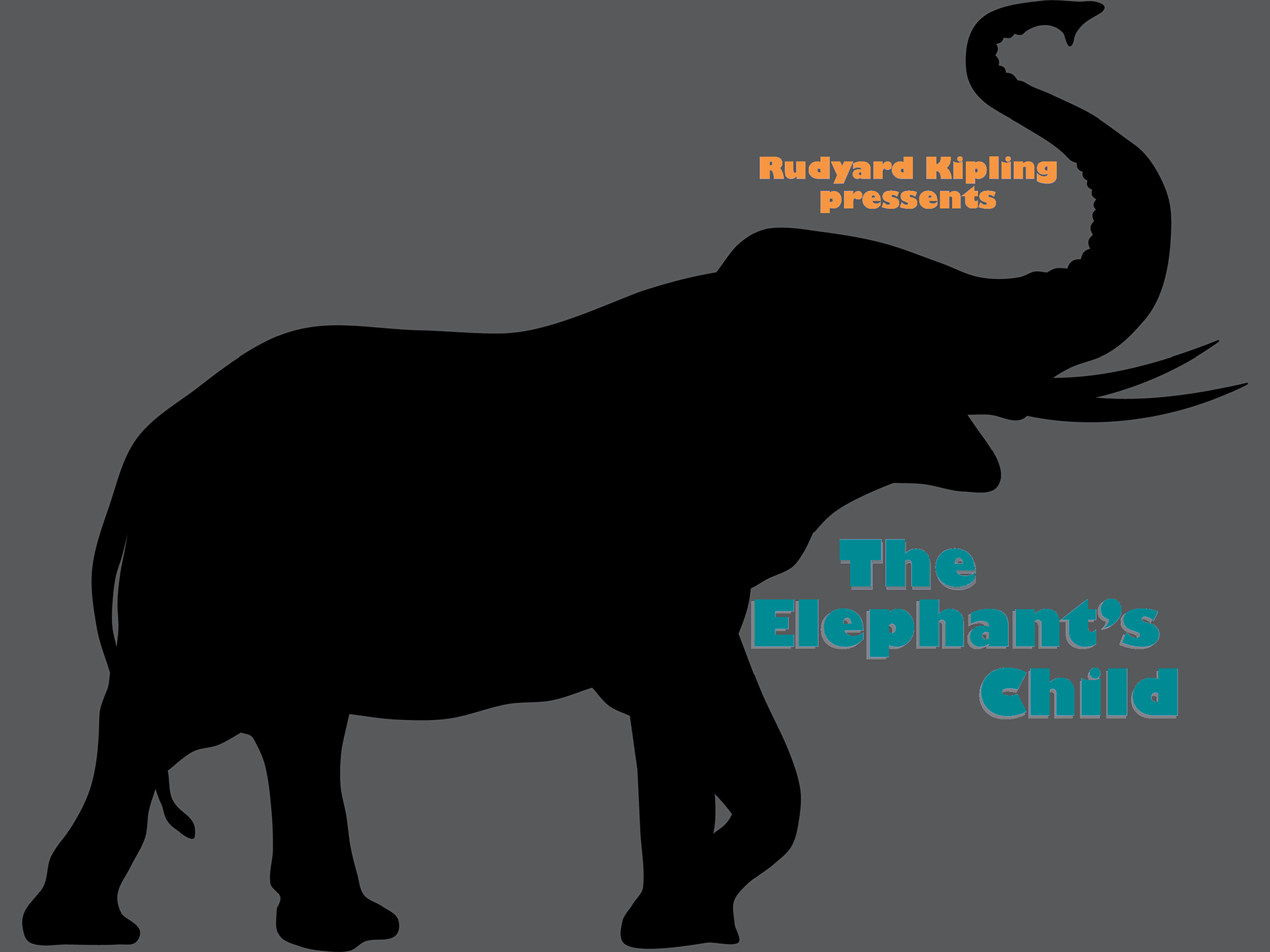

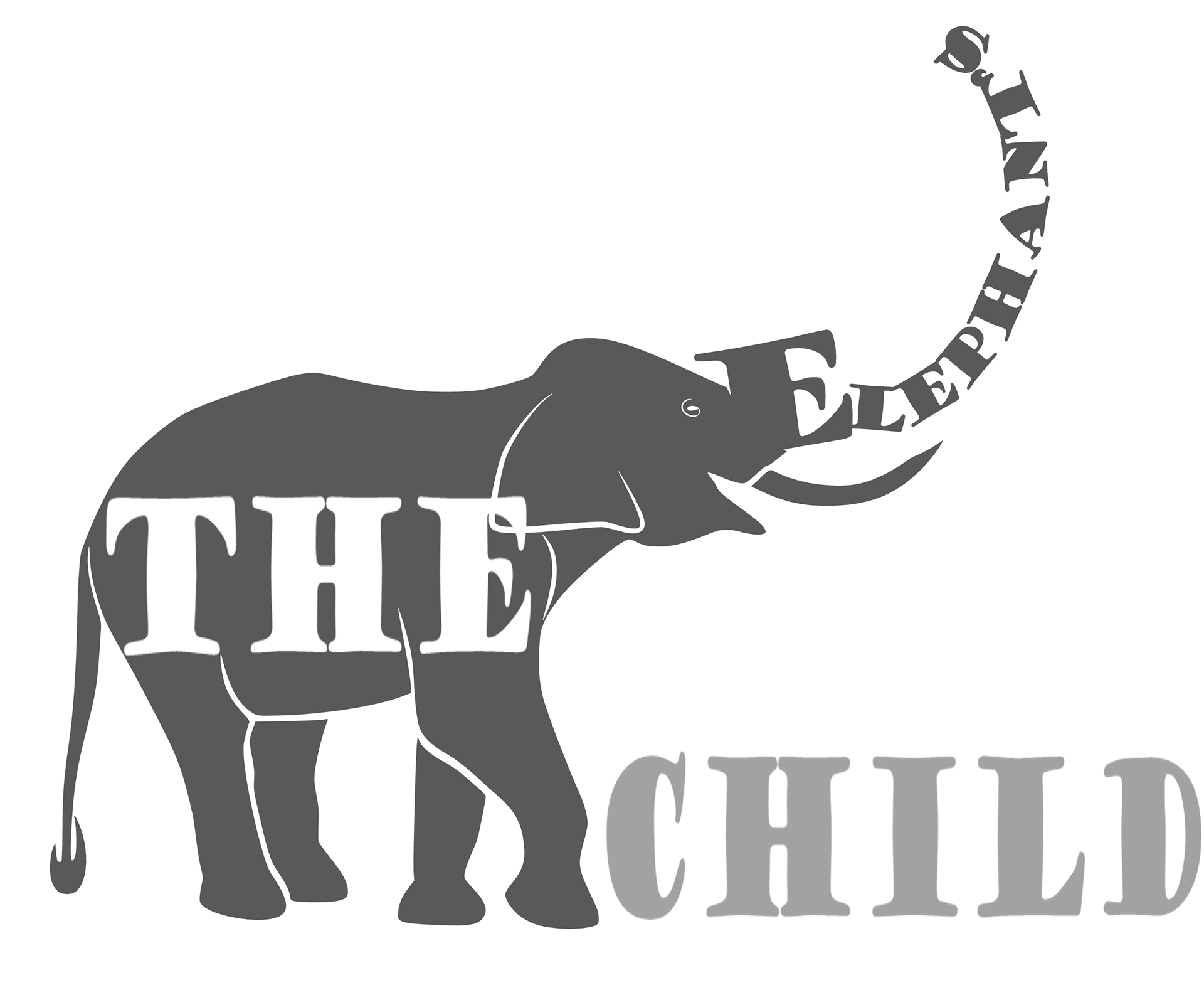
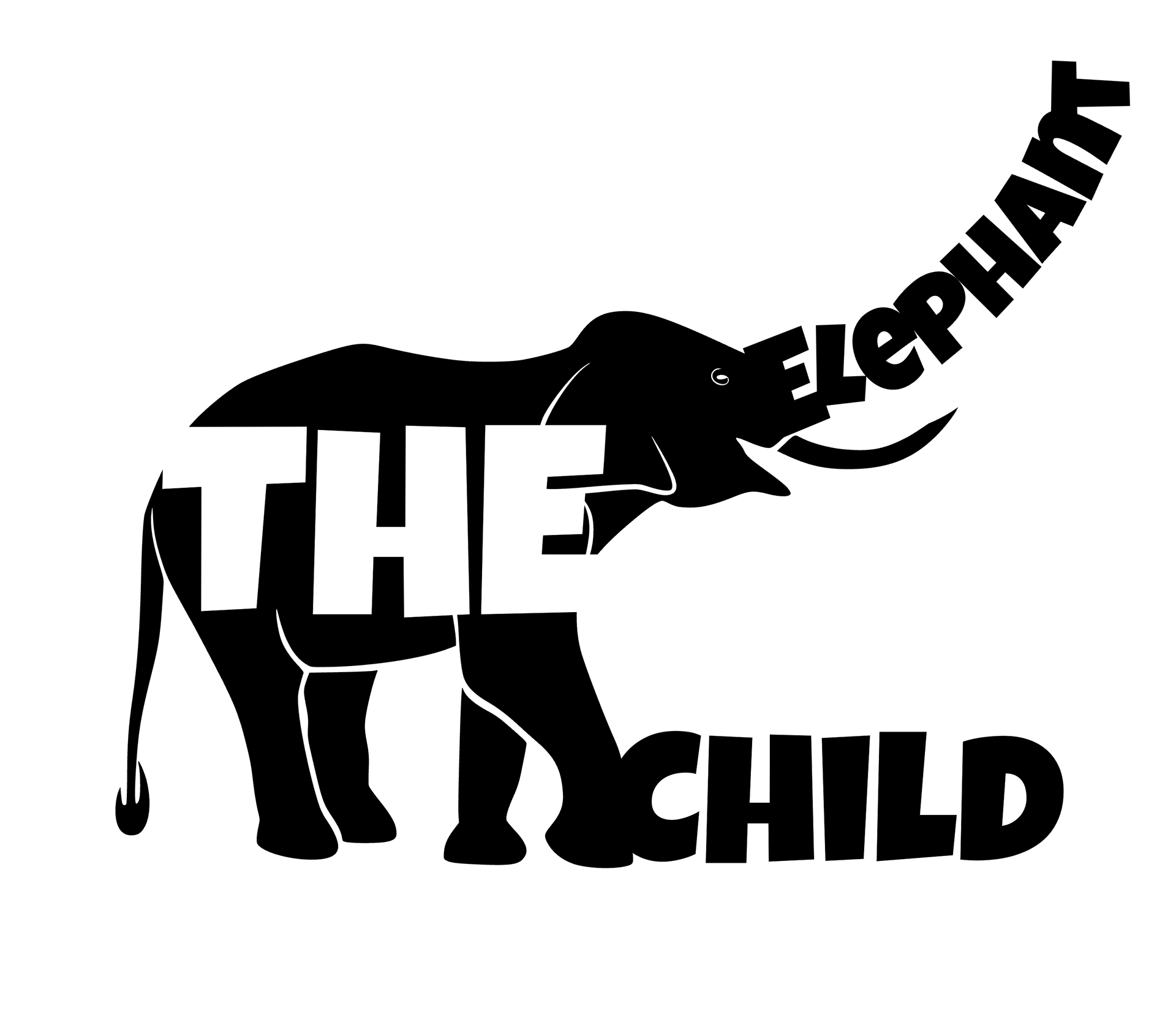
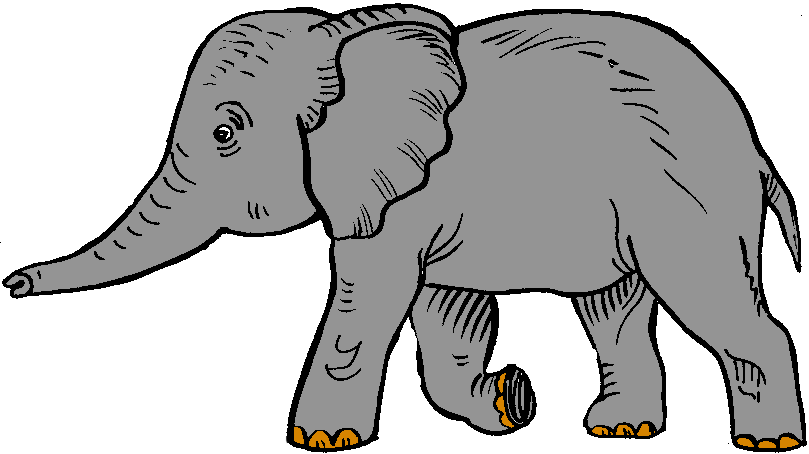


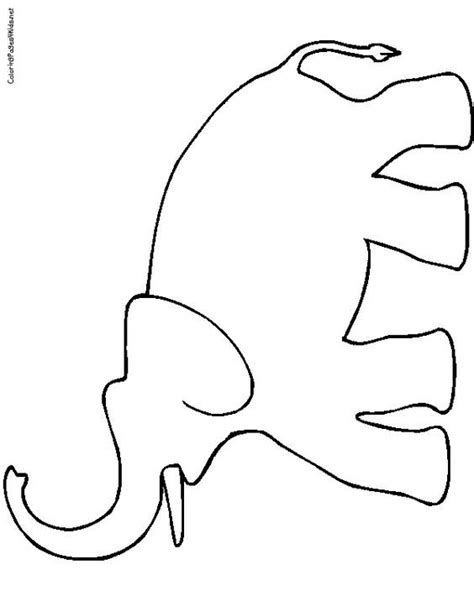
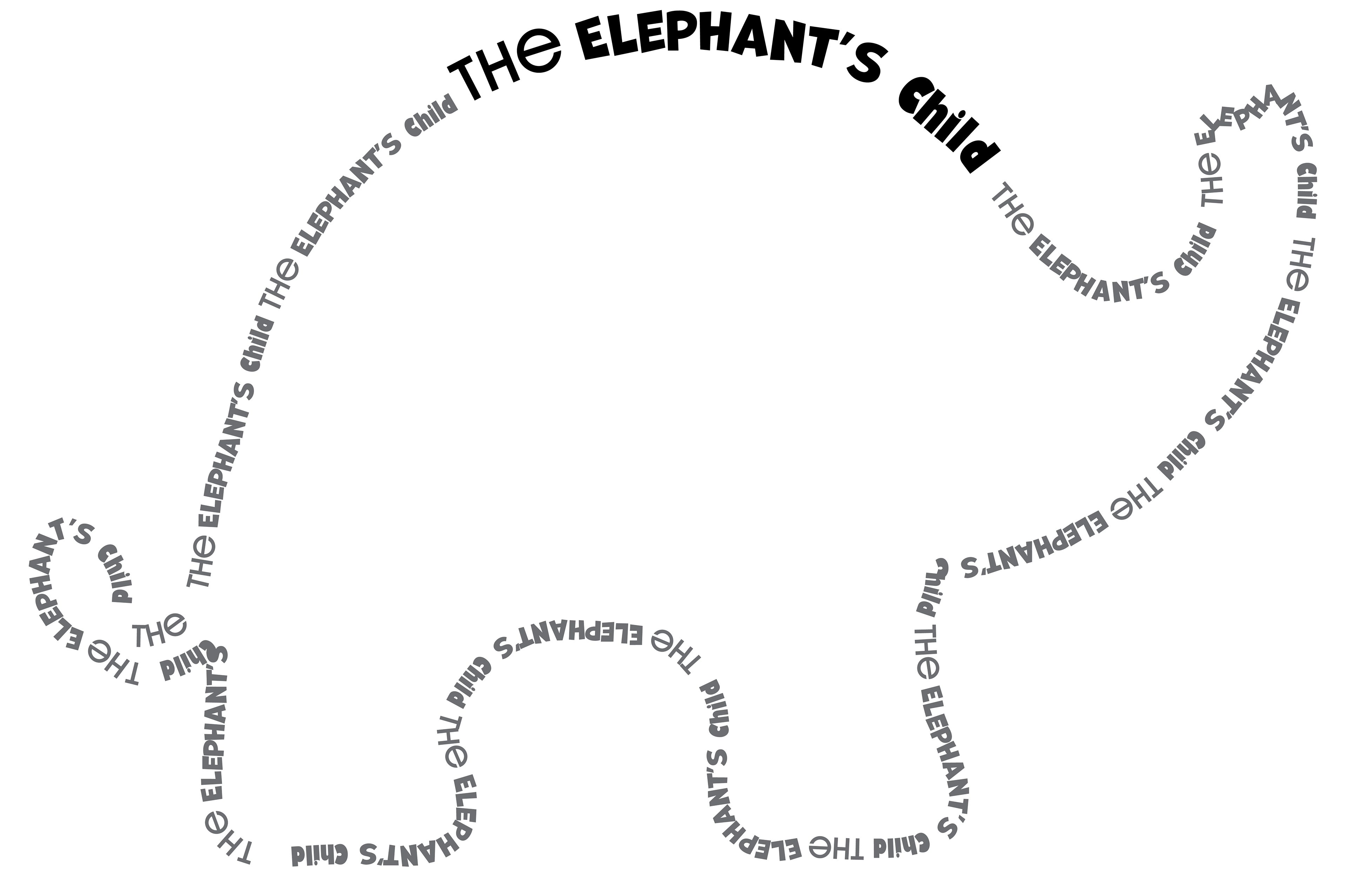

Illustration & Character Development
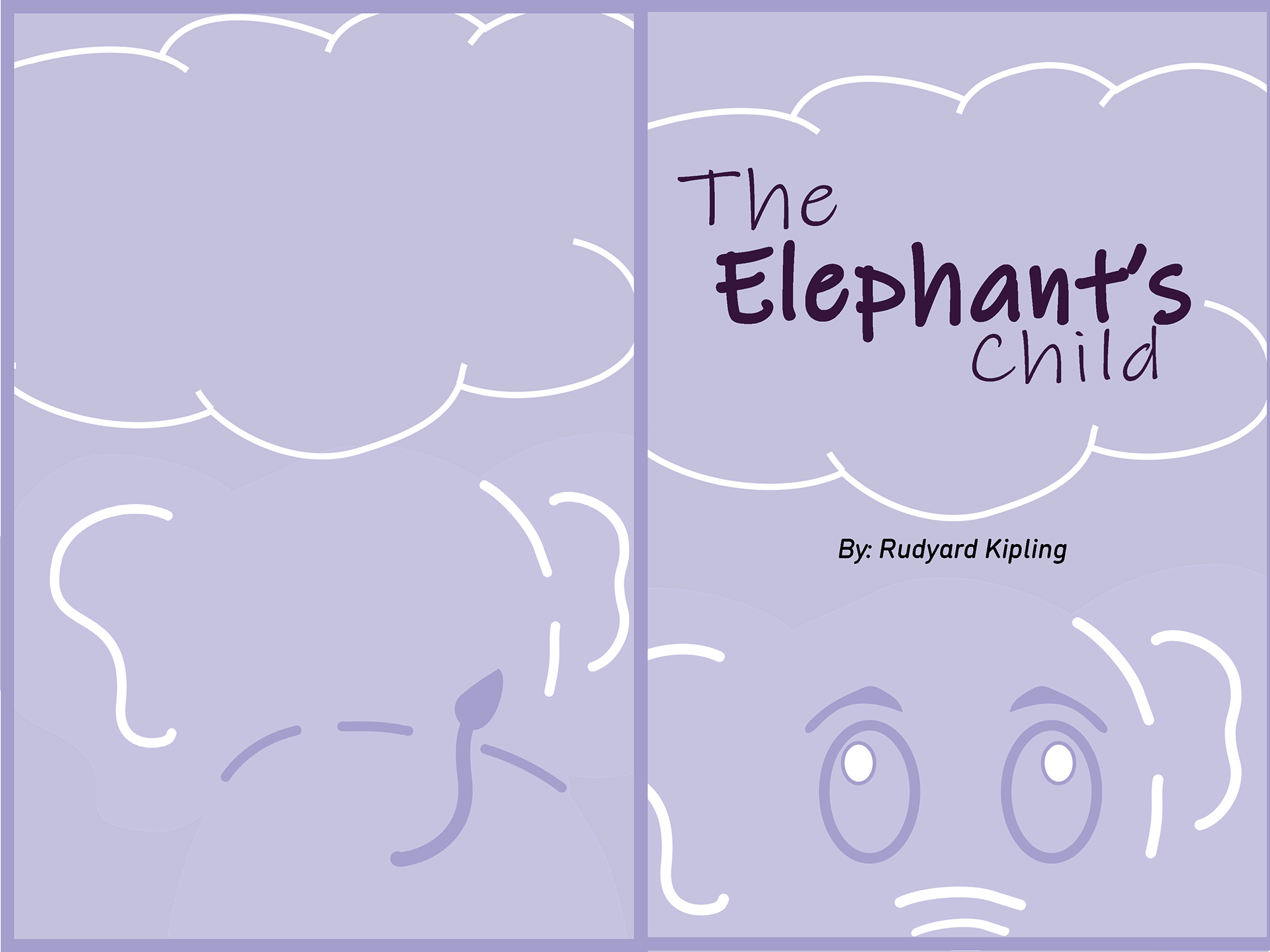
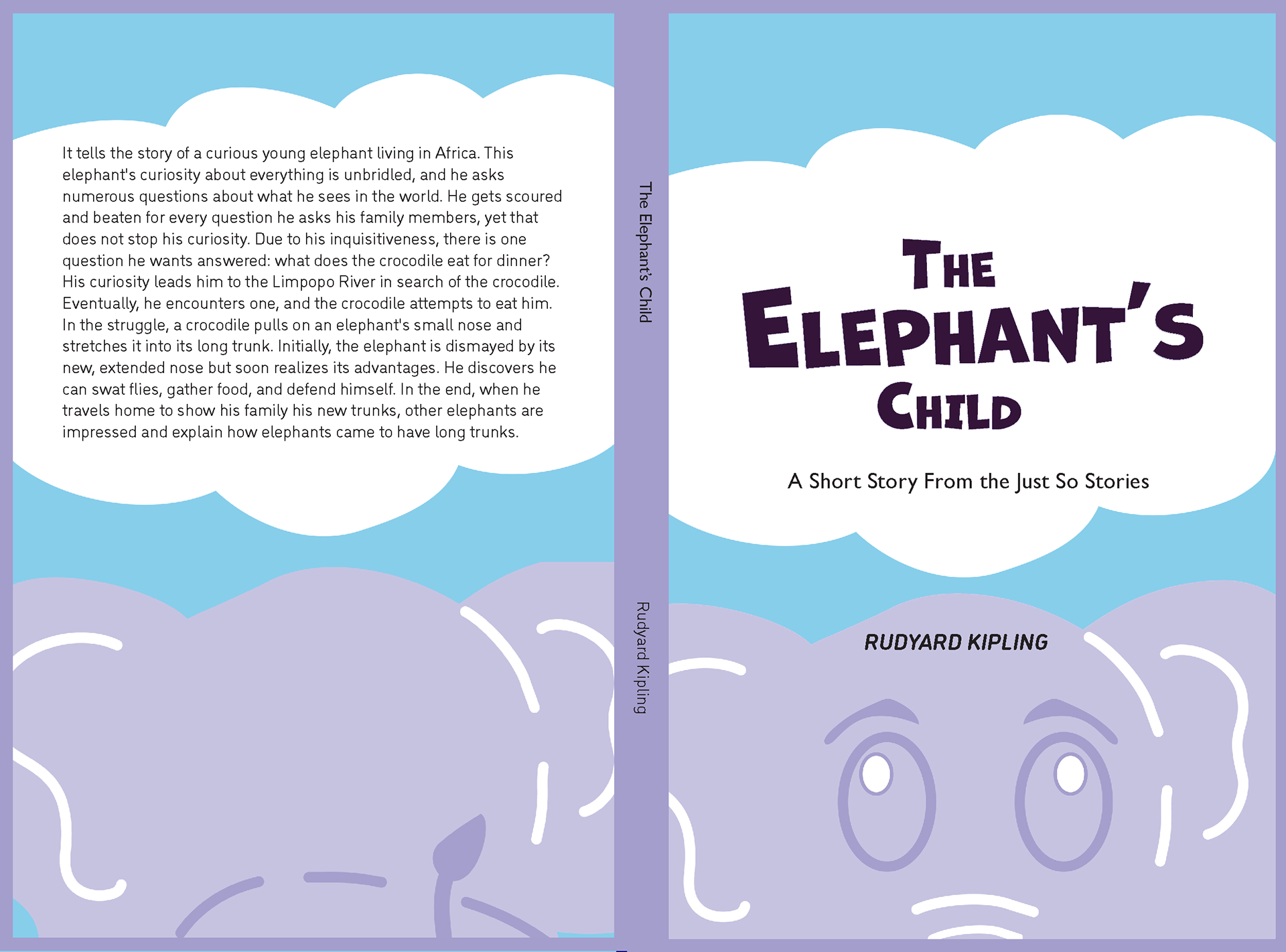
The elephant character went through several visual stages, beginning with more realistic silhouettes and line-based elephant studies. Over time, the design became softer, rounder, and simpler. The final elephant uses a lavender color palette, minimal facial details, and rounded shapes to feel friendly, curious, and approachable for children. This simplified character style also made it easier to use the elephant across the cover, endpapers, patterns, and interior spreads.
Layout & Reading Experience
The layout process included testing different alignment systems, including justified text, alignment toward the spine, and alignment away from the spine. These experiments helped me understand how spacing, margins, and text flow affect readability. The final layout uses more open spacing, clearer hierarchy, and alternating page rhythms to balance text-heavy moments with expressive visual spreads.
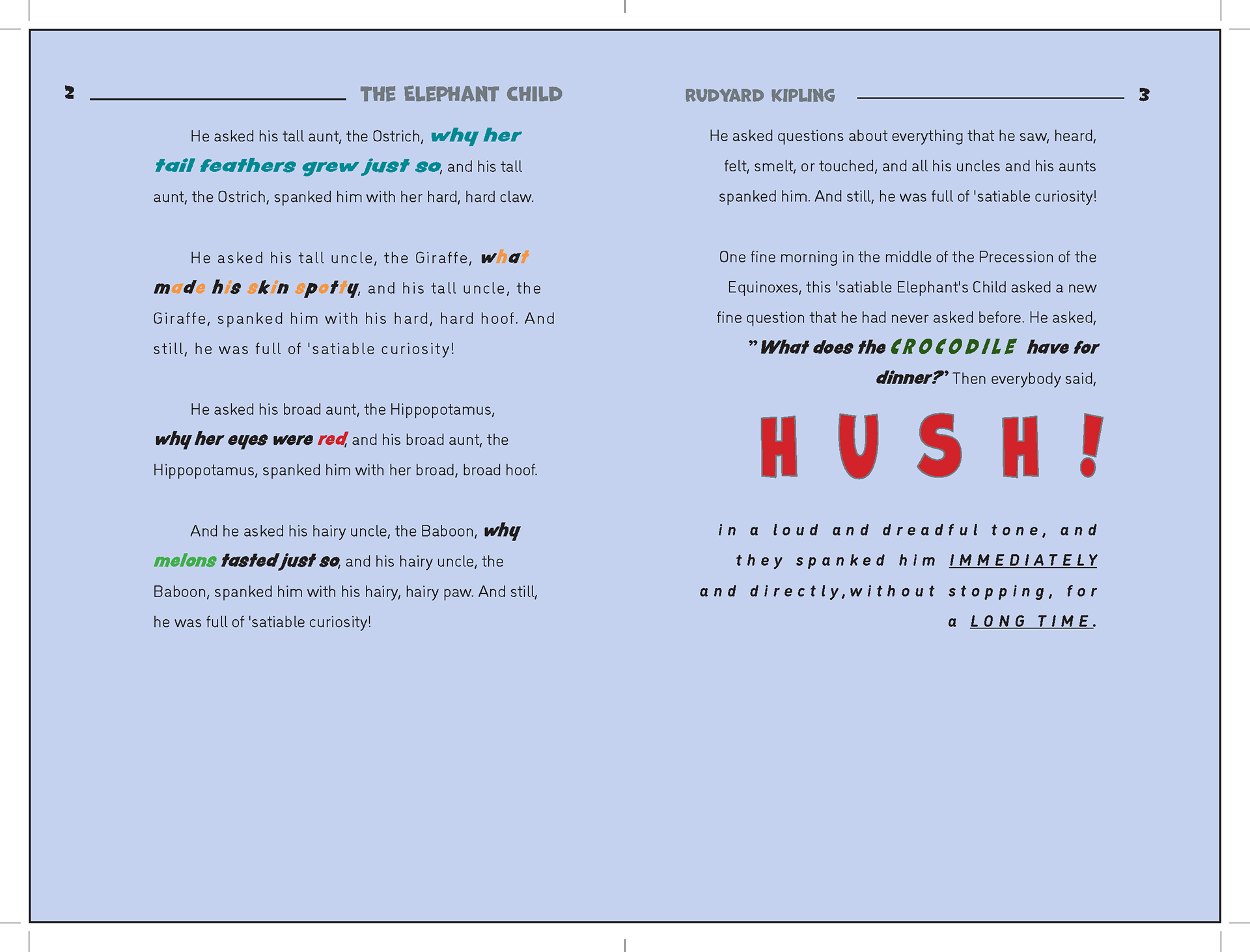
Align Away from Spine - page 2
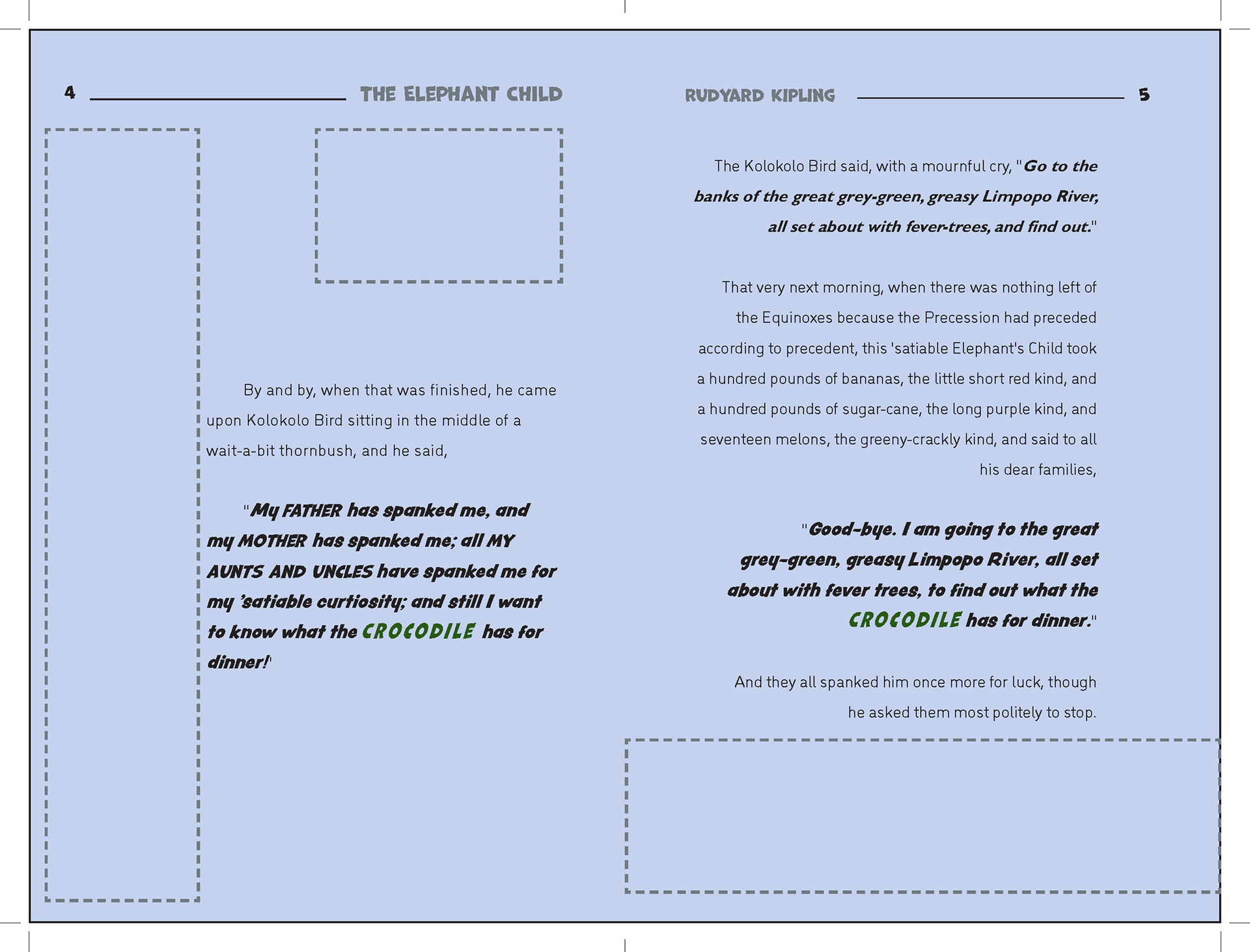
Align Away from Spine page 3
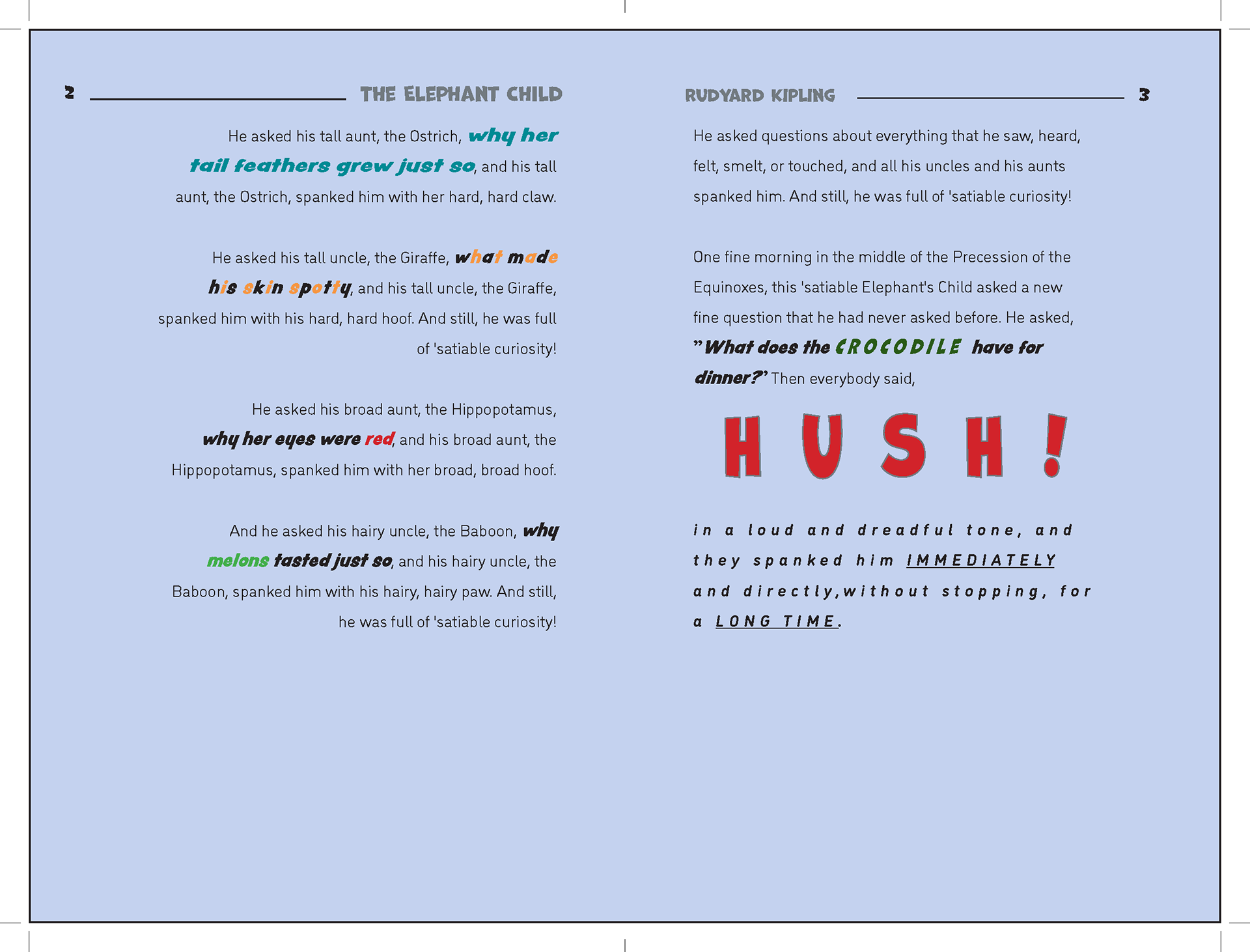
Align Toward Spine_Page_2
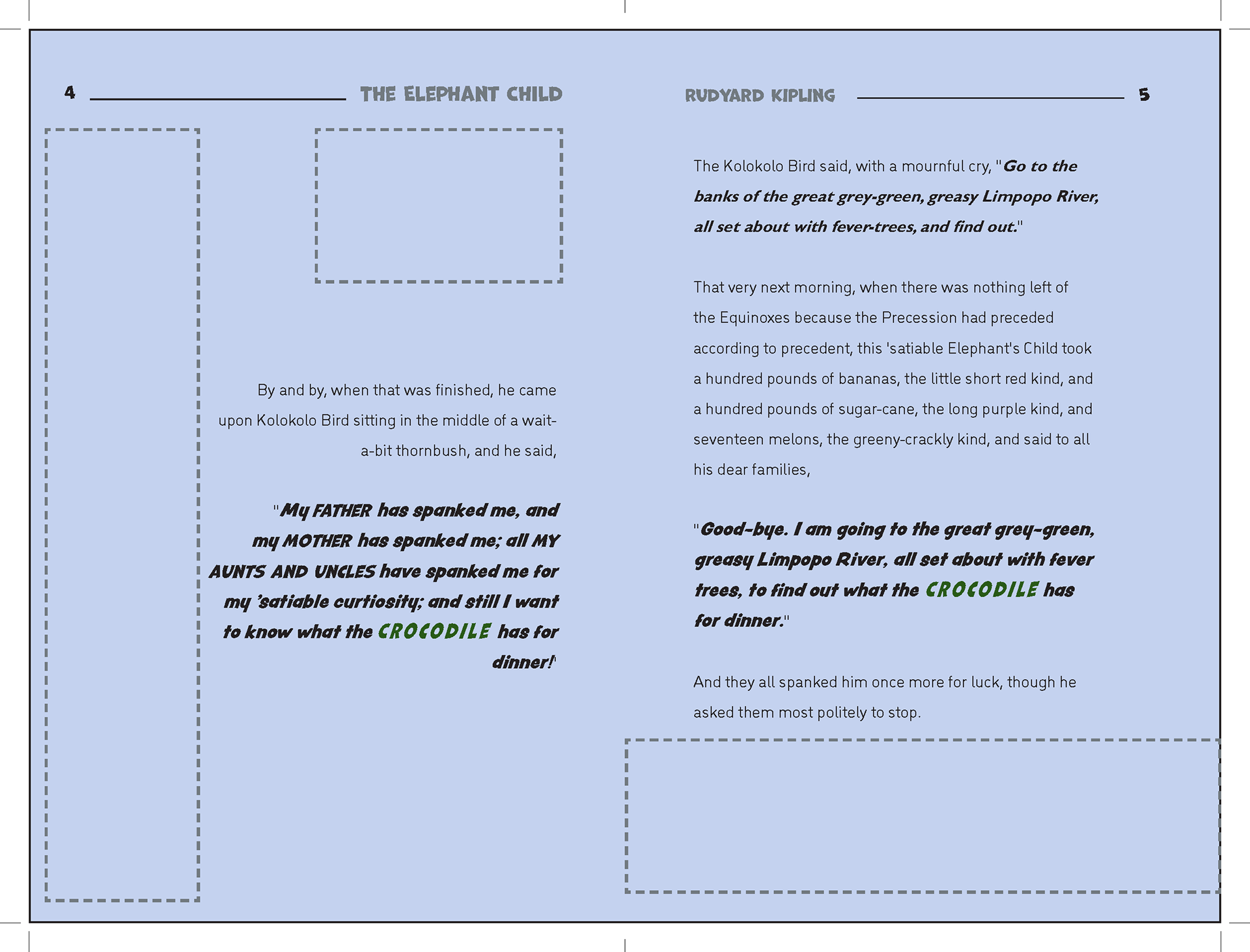
Align Toward Spine_Page_3
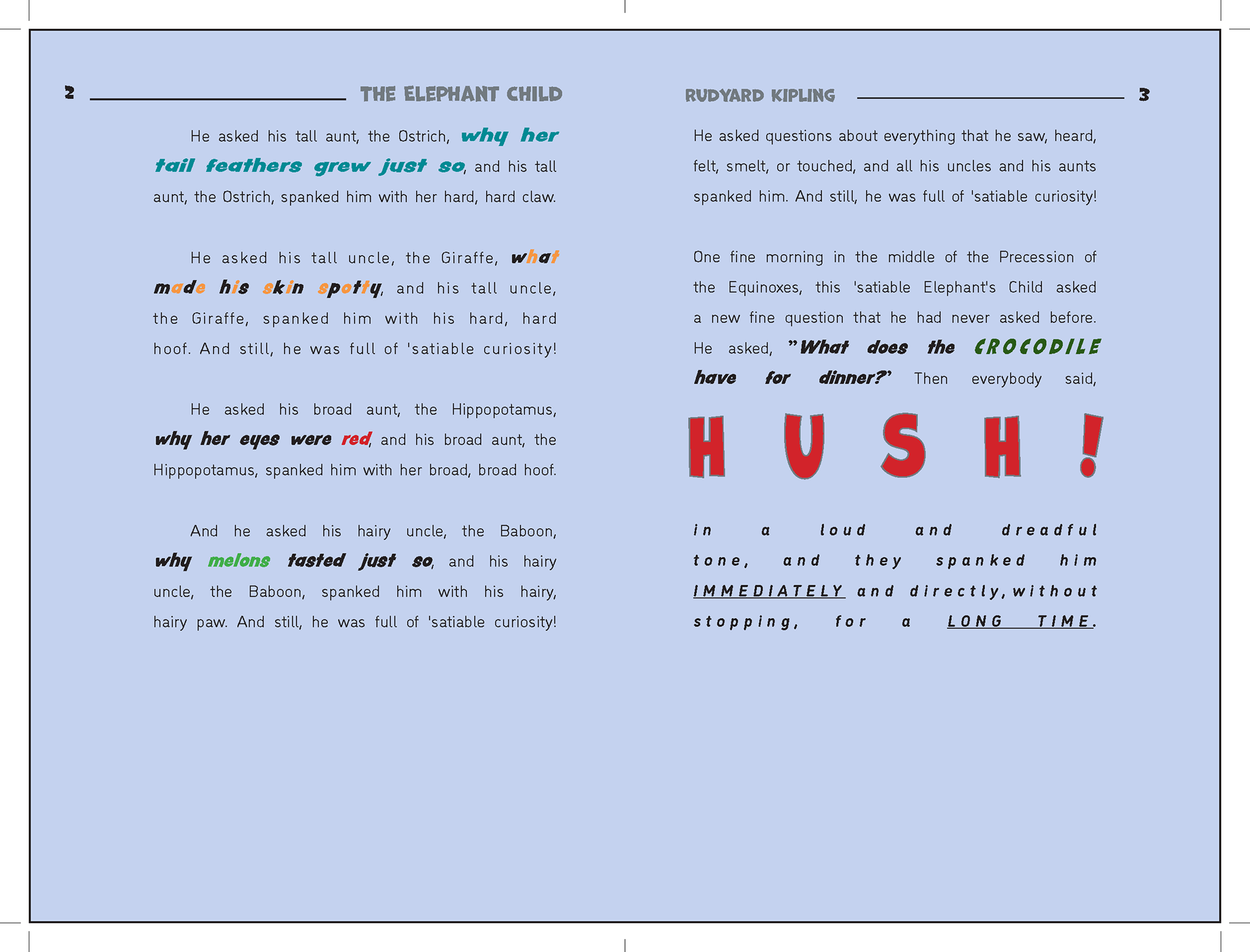
All Justify Page 2
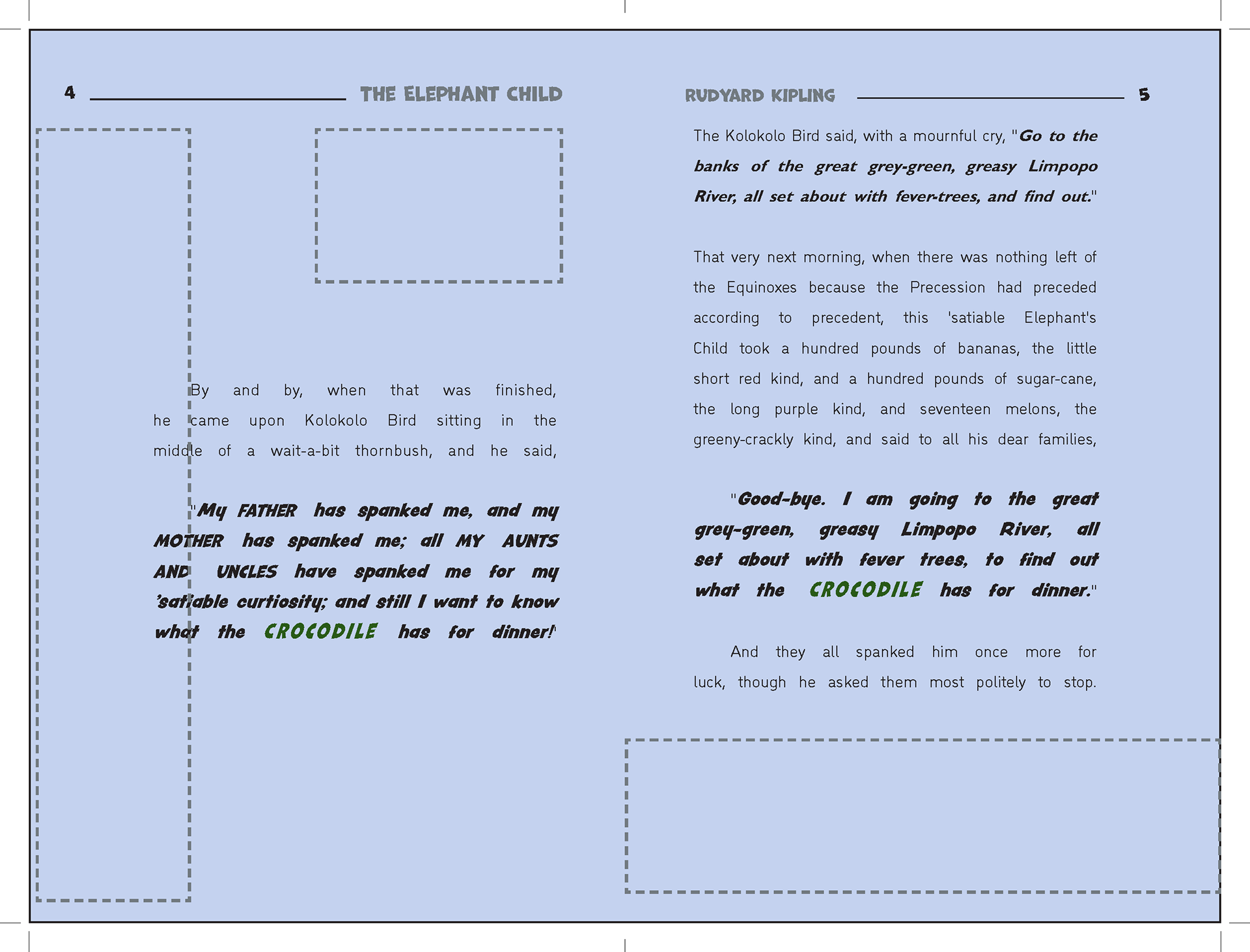
All Justify Page 3


Iteration & Refinement
The design evolved through multiple versions. Early drafts focused on structure and readability, while later versions became more expressive and thematic. I refined the cover, title treatments, elephant motifs, and interior pacing until the visual system felt cohesive. The strongest breakthrough was the question-cloud concept, which unified the book’s theme, character, and visual identity into a single, clear design direction.
Final Design
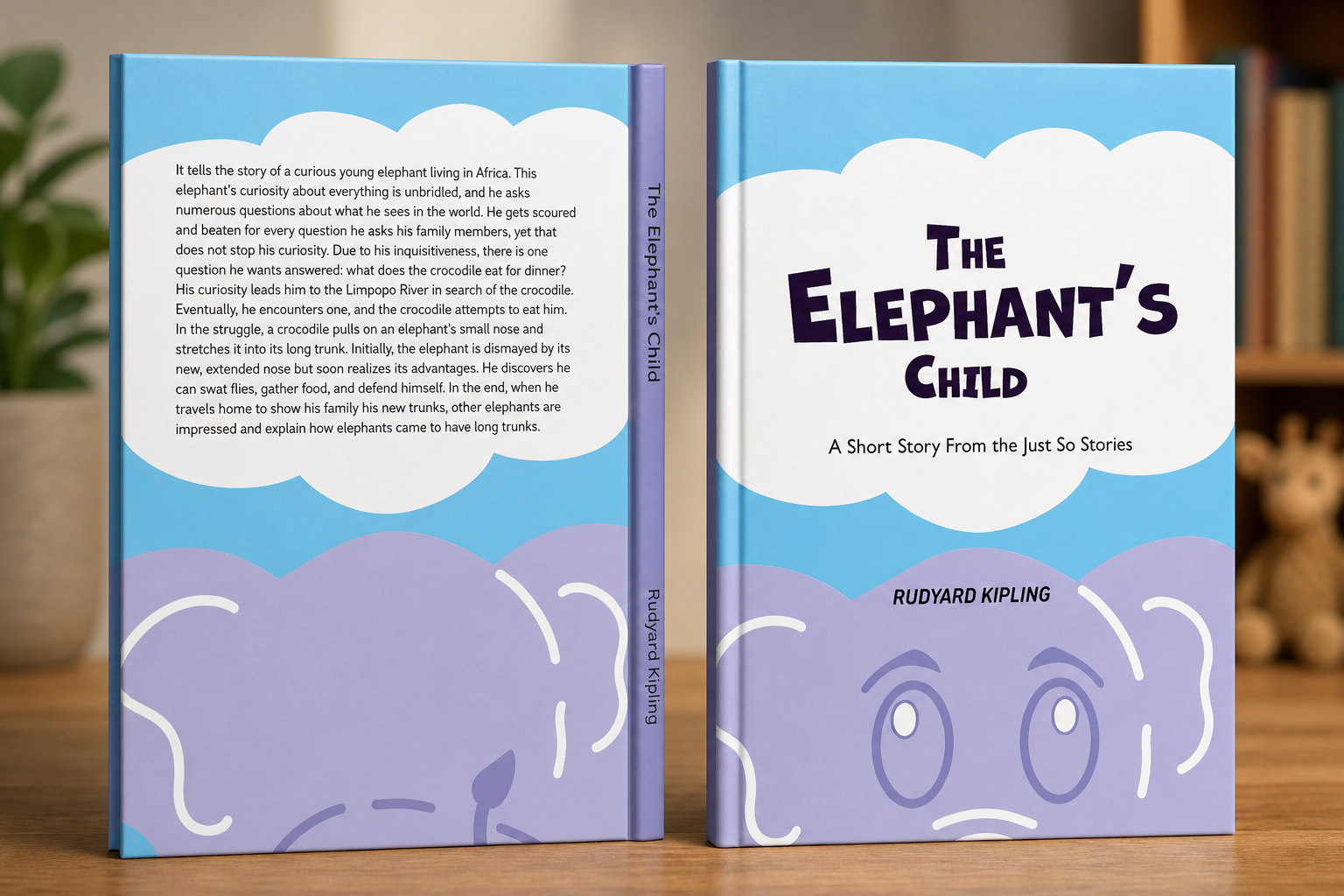
The final book redesign balances playful storytelling with clean structure. The cover uses a large cloud shape, bold title typography, and the elephant character peeking from the bottom to immediately communicate curiosity and innocence. The repeating elephant pattern creates a memorable visual identity, while the interior spreads use typography and illustration to guide the reader through the story’s emotional moments.
REFLECTION
This project helped me understand how a children’s book can be redesigned through more than illustration alone. I learned how typography, pacing, pattern, and character design can work together to support a story’s theme. Most importantly, this redesign showed me how visual systems can mirror character development—turning the Elephant’s curiosity into the foundation for the entire book experience.