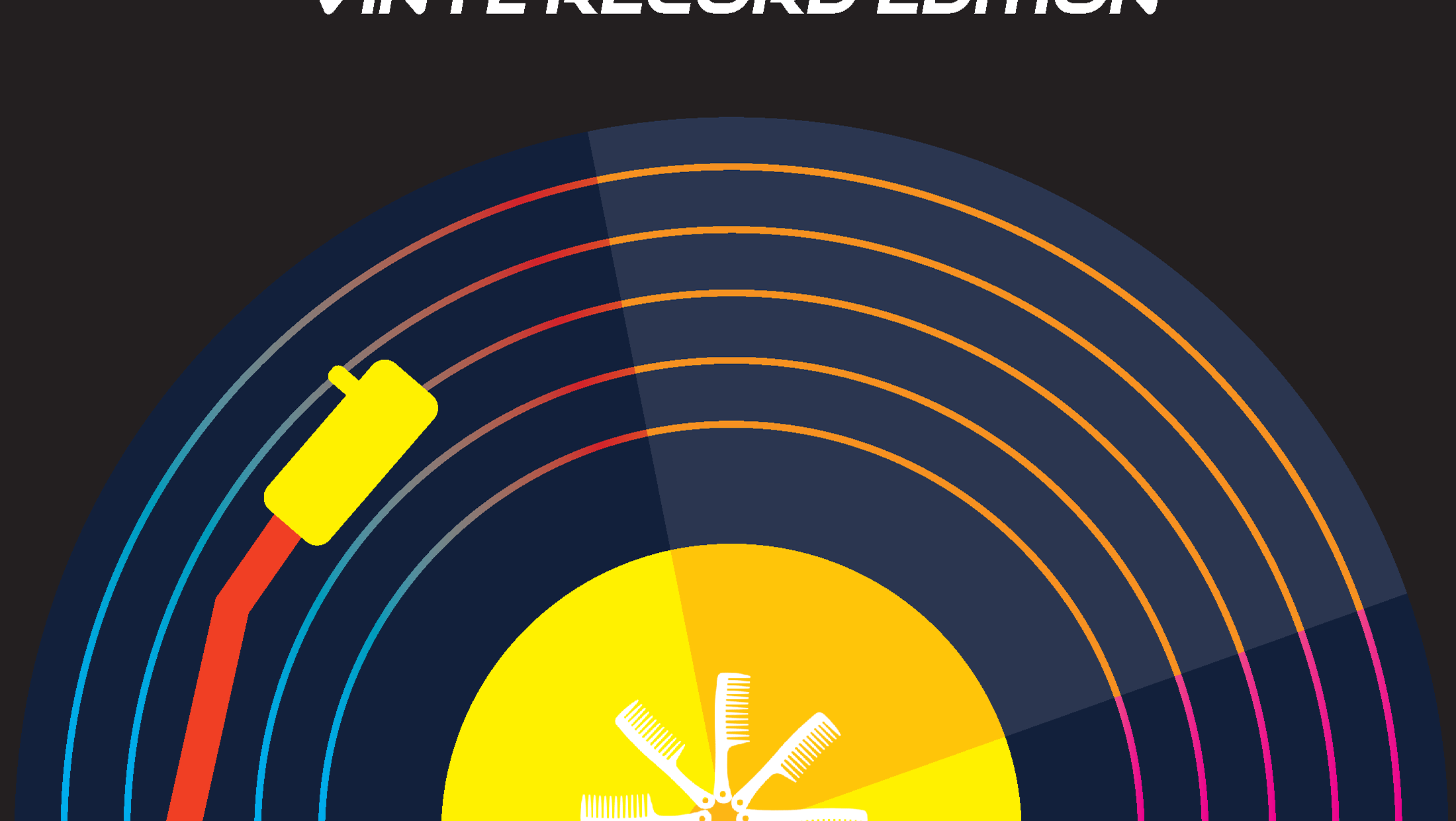
A narrative-driven artist book designed as an in-world journal documenting a Dungeons & Dragons campaign from a druid’s perspective.
PROJECT Concept
This project is a narrative-driven journal inspired by my experience playing Dungeons & Dragons. The goal was to solve a real problem within my group—remembering past sessions—by creating a recap book that documents each adventure in a cohesive and immersive format.
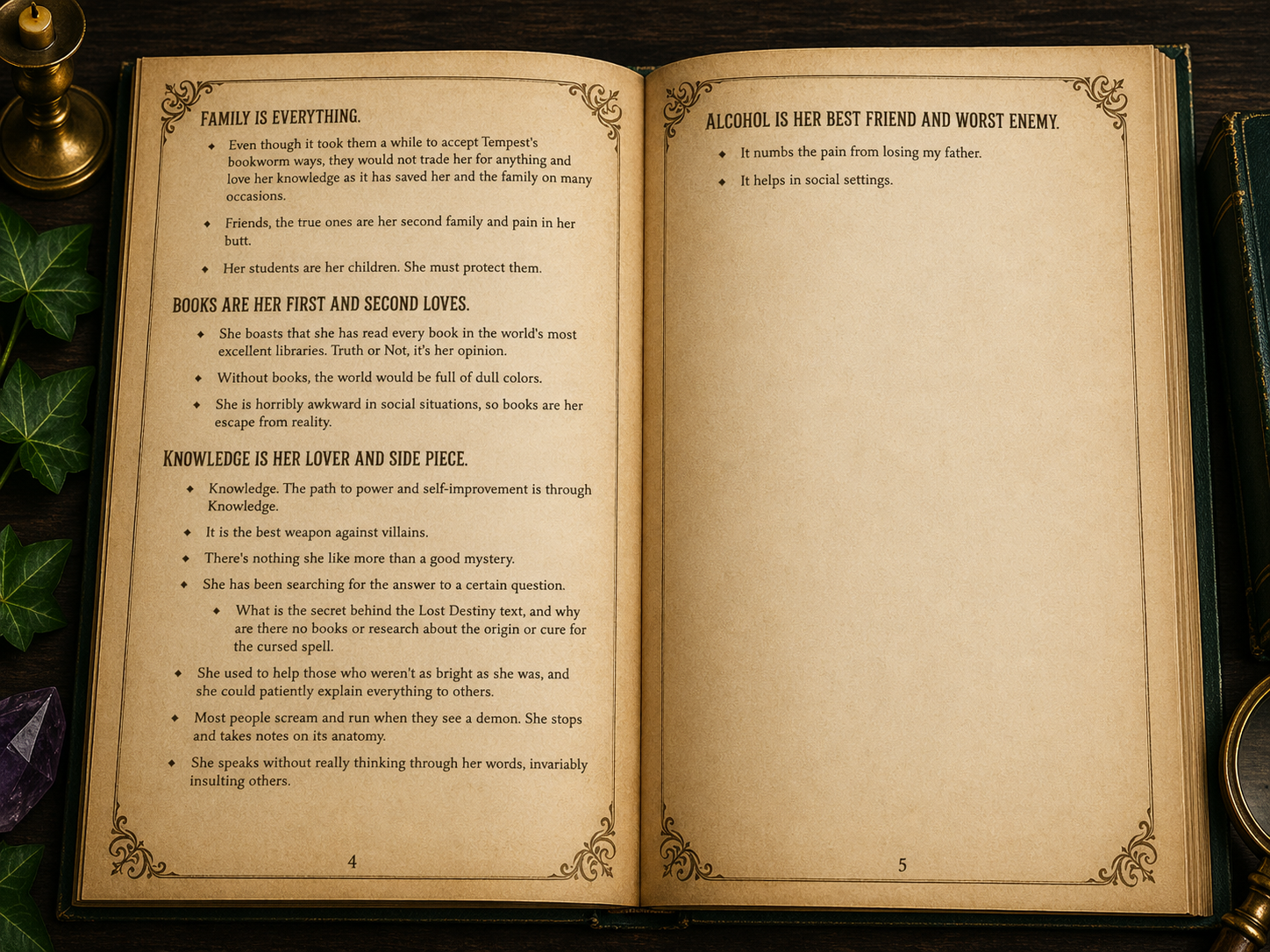
The book is written from the perspective of my character, Tempest Dee Nile, transforming the recap into a researcher’s journal and storytelling artifact rather than a simple record of events.
Inspiration and direction
The visual direction was inspired by:
- fantasy worldbuilding
- researcher journals and field notes
- aged books and archival materials
- Dungeons & Dragons character sheets and lore
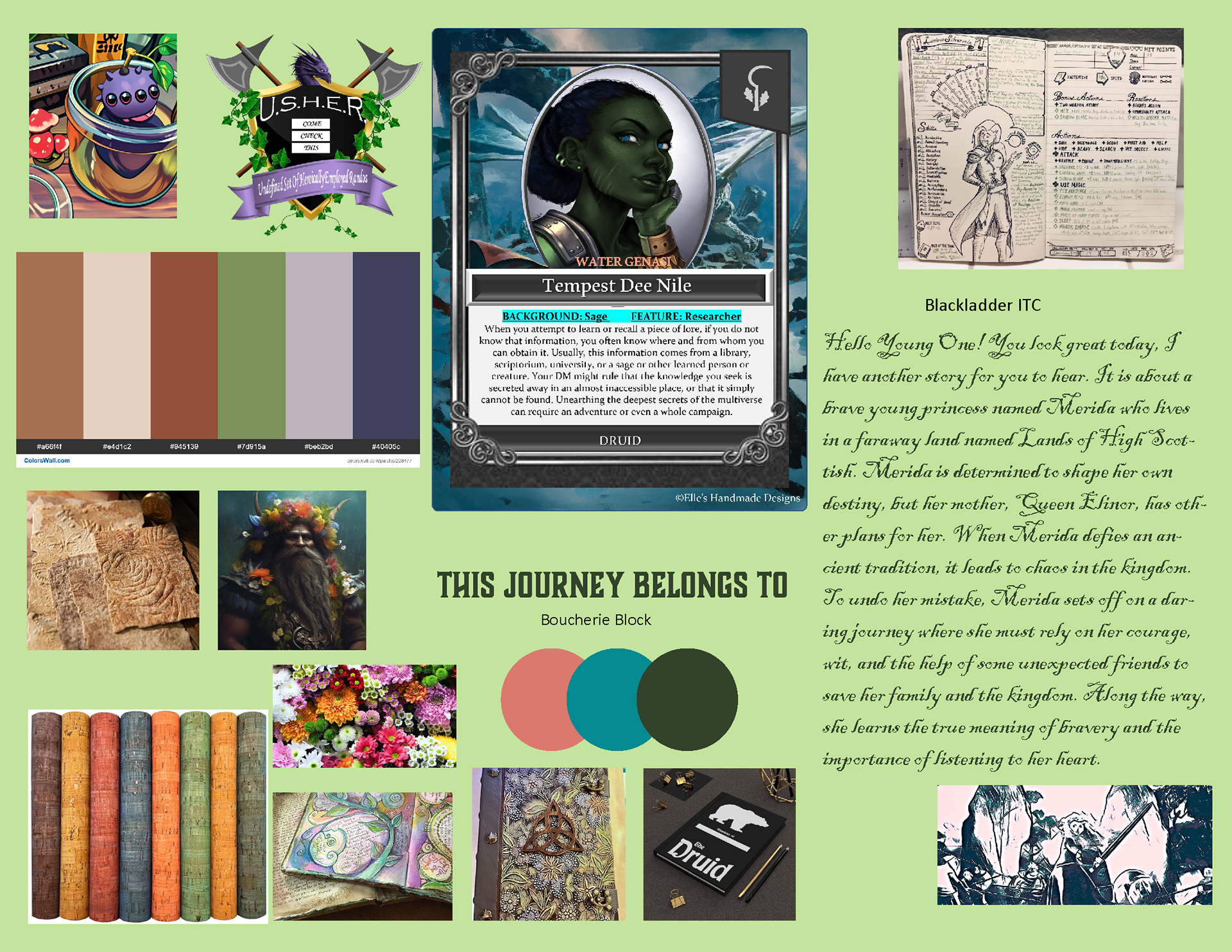
The moodboard reflects a mix of:
- natural textures (leather, paper, aged materials)
- fantasy illustrations
- character-driven visuals
- muted, earthy color palettes
This combination helped shape the book into something that feels both personal and immersive, like a real artifact from the game world.
Exploration (Narrative & Structure)
I explored how to organize multiple game sessions into a format that was both readable and engaging. The book includes:
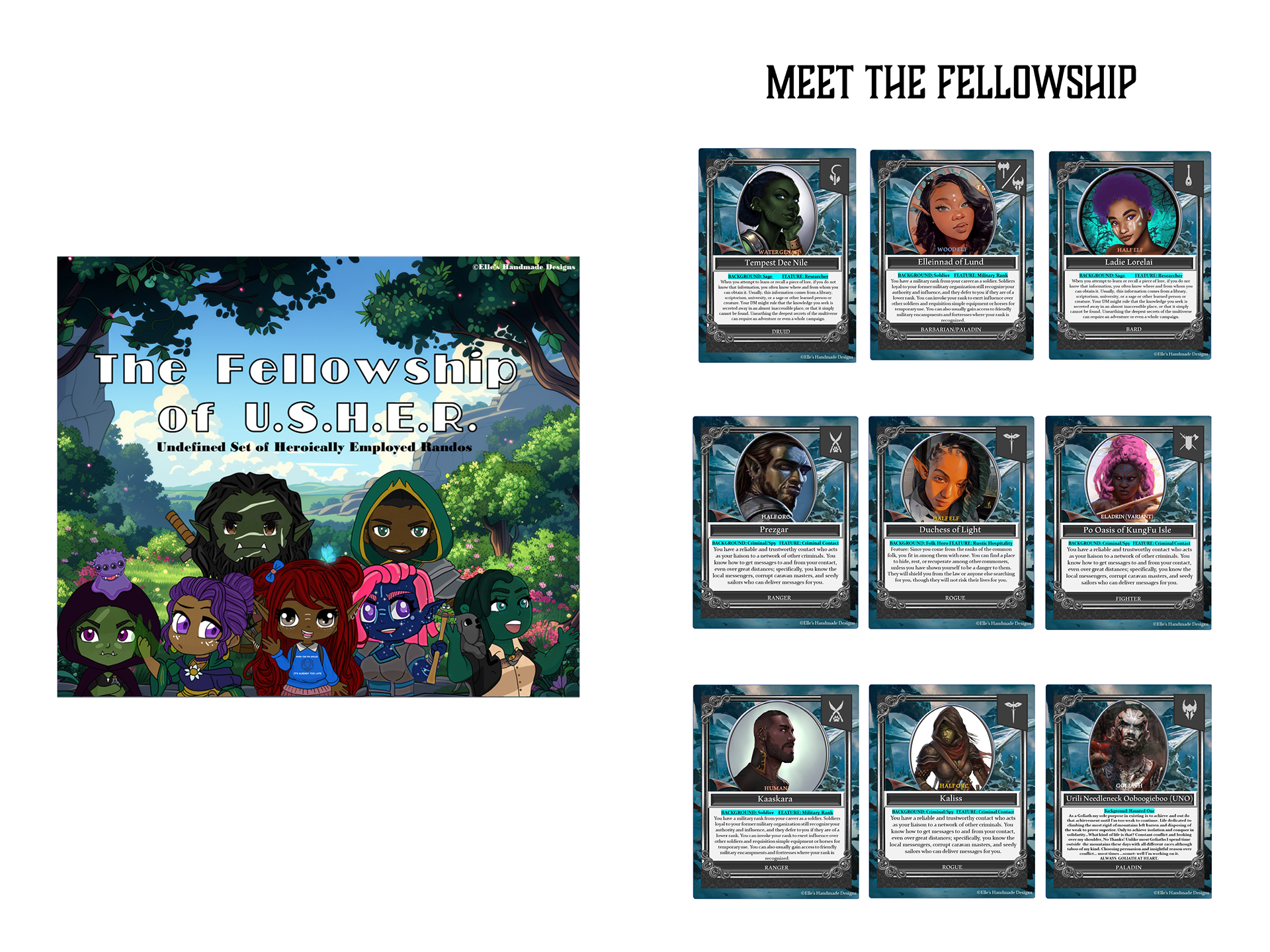
- character introductions
- session-by-session recaps
- narrative storytelling sections
- visual illustrations tied to key moments
- session-by-session recaps
- narrative storytelling sections
- visual illustrations tied to key moments
The structure progresses from an introduction to a deeper narrative, allowing readers to enter the story, understand the characters, and relive the journey.
I also experimented with tone, shifting from informational to immersive storytelling written in the character’s voice.
Design Decisions
Several key decisions shaped the final design:
Journal-style format → creates authenticity and immersion
Typography pairing → combines decorative fonts with readable body text to reflect both fantasy and clarity
Layout structure → balances text-heavy pages with visuals to maintain engagement
Character perspective (POV writing) → strengthens storytelling and emotional connection
Section organization → clear progression from introduction → sessions → conclusion
Each page was designed to feel like part of a living document, not just a designed book.
Materials & Construction
The physical concept included:
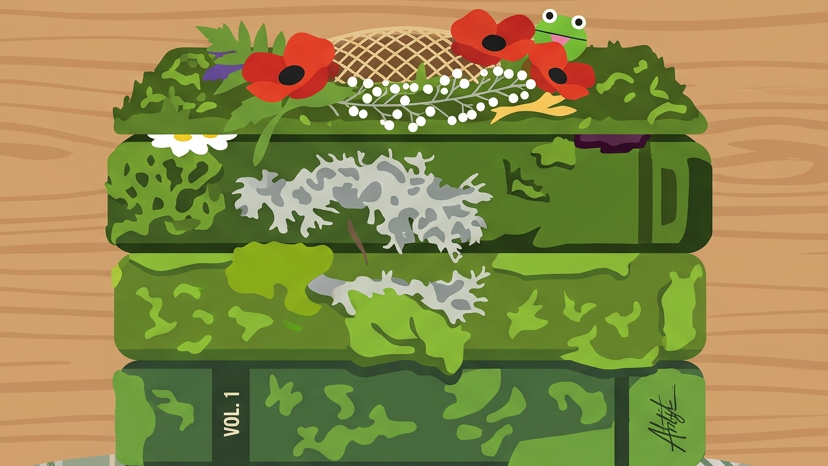
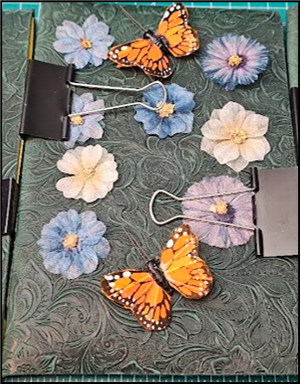
- faux leather cover
- textured interior papers
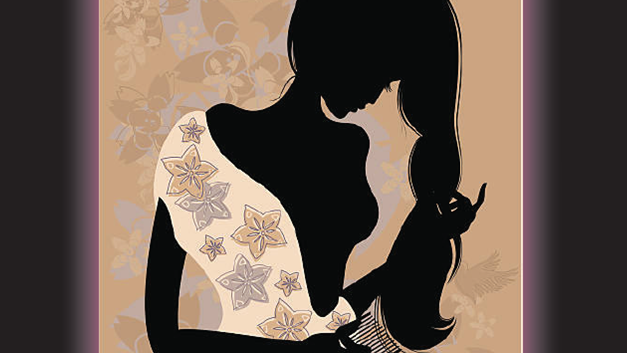
- decorative elements like flowers and natural textures
These material choices were intended to reinforce the sense of a researcher’s field journal, making the book feel tactile and grounded in the story's world.
Final Result Gallery
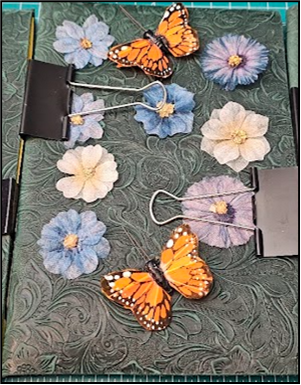
cover
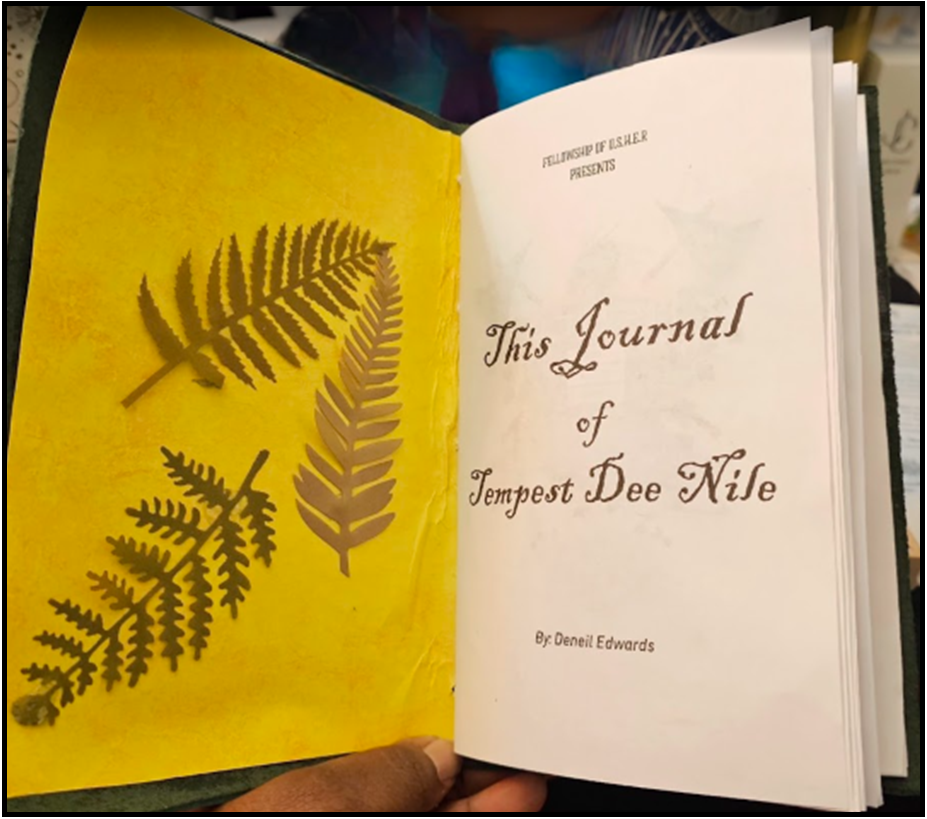
inside cover
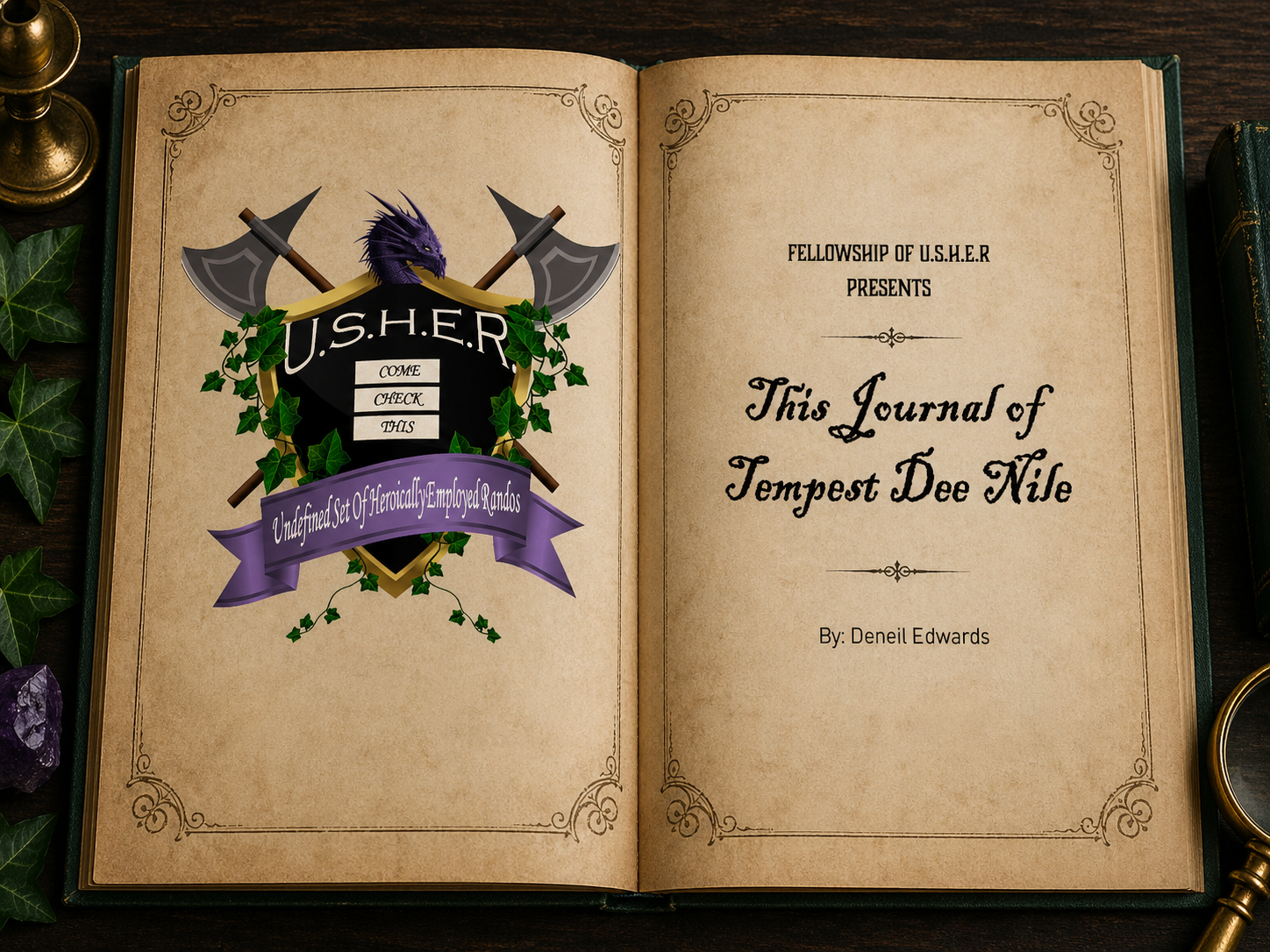
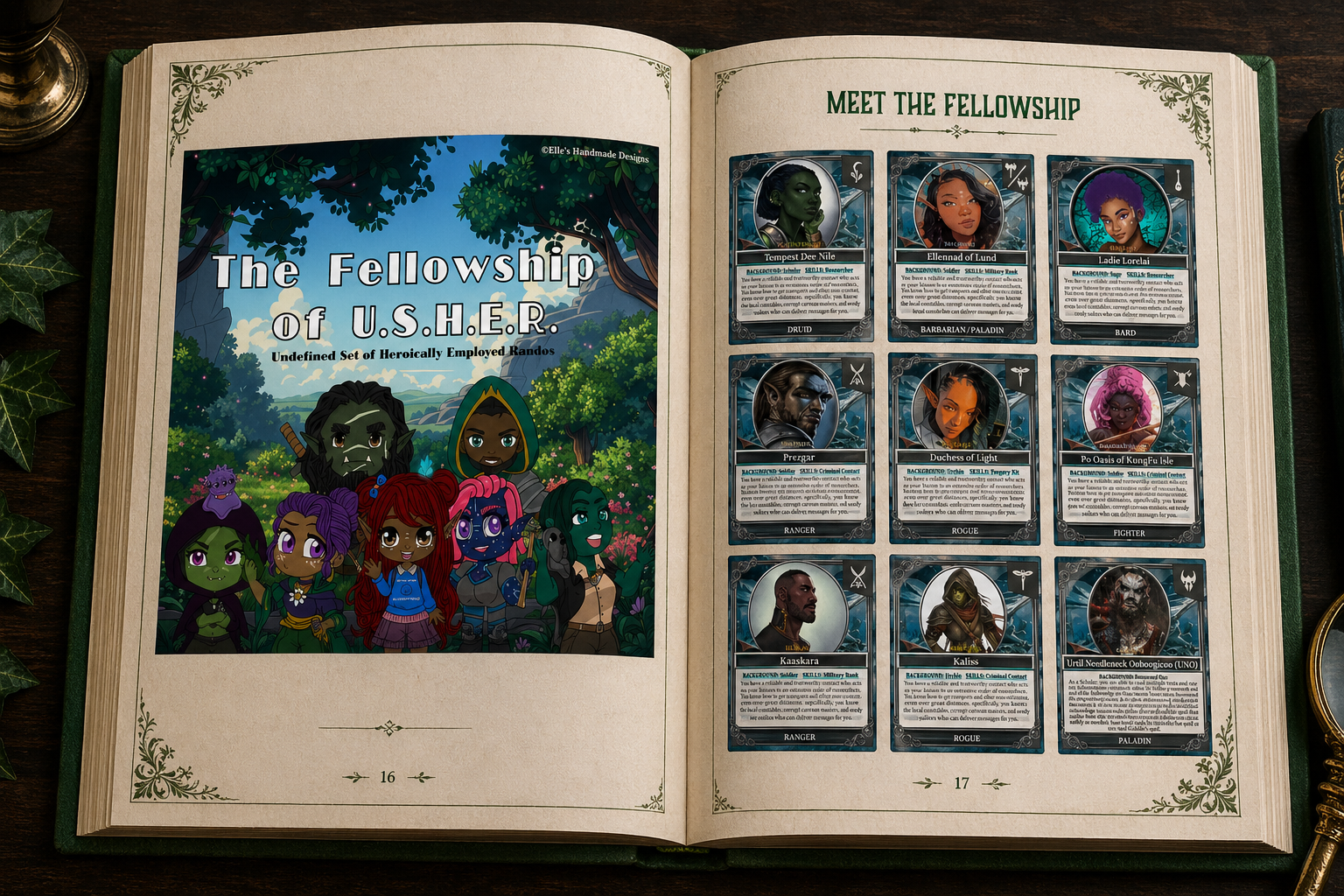
meet the followship
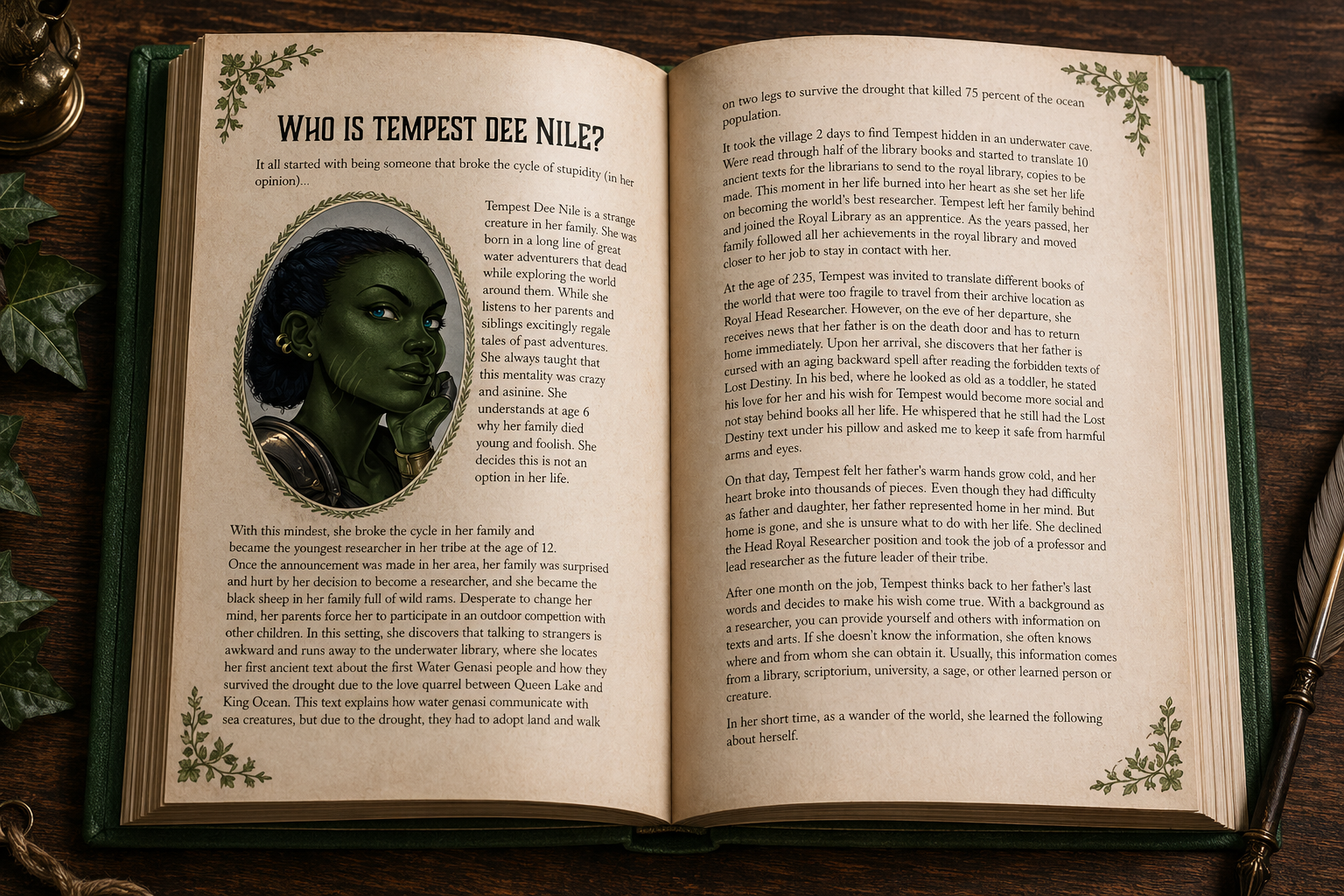
druid page
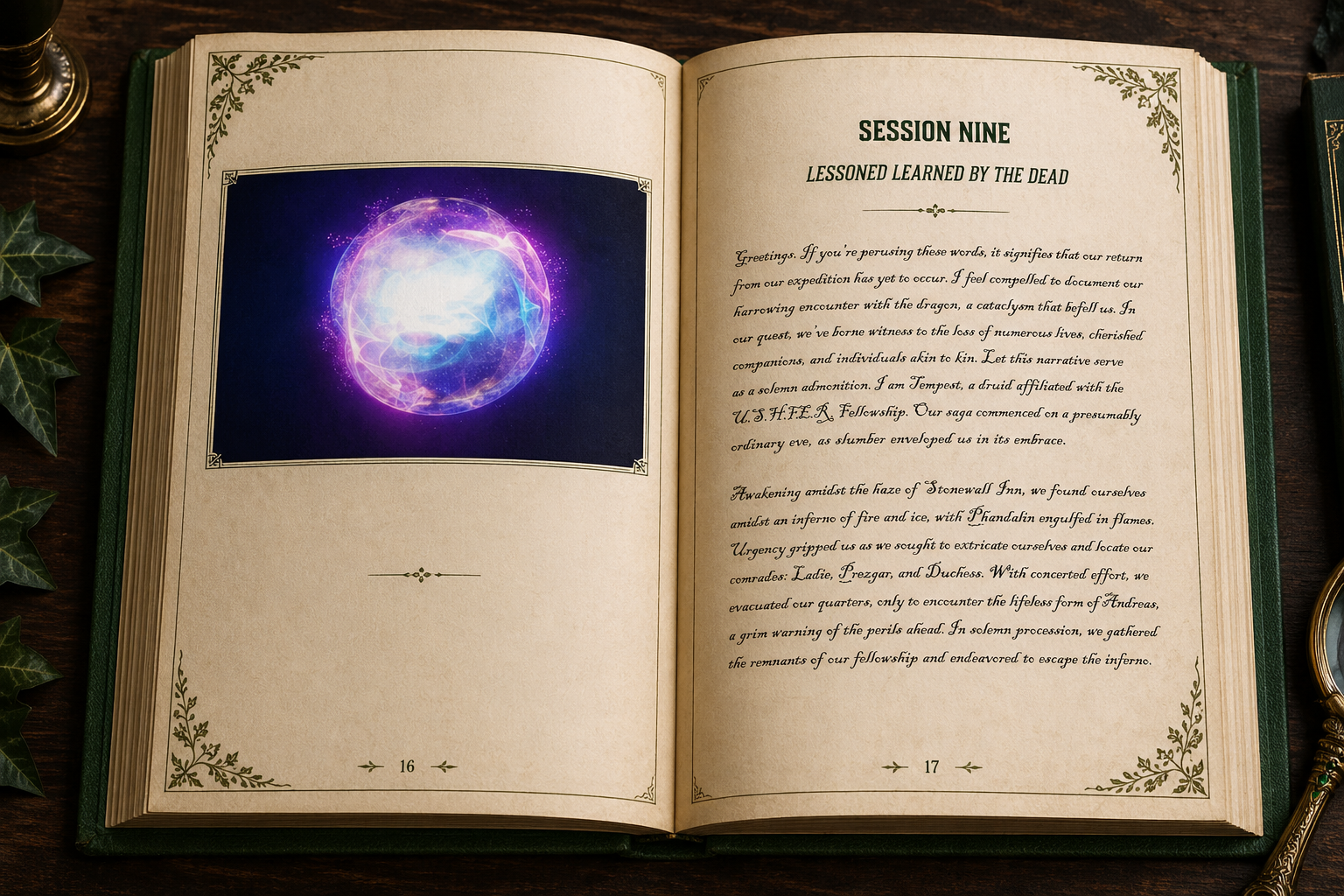
chapter page
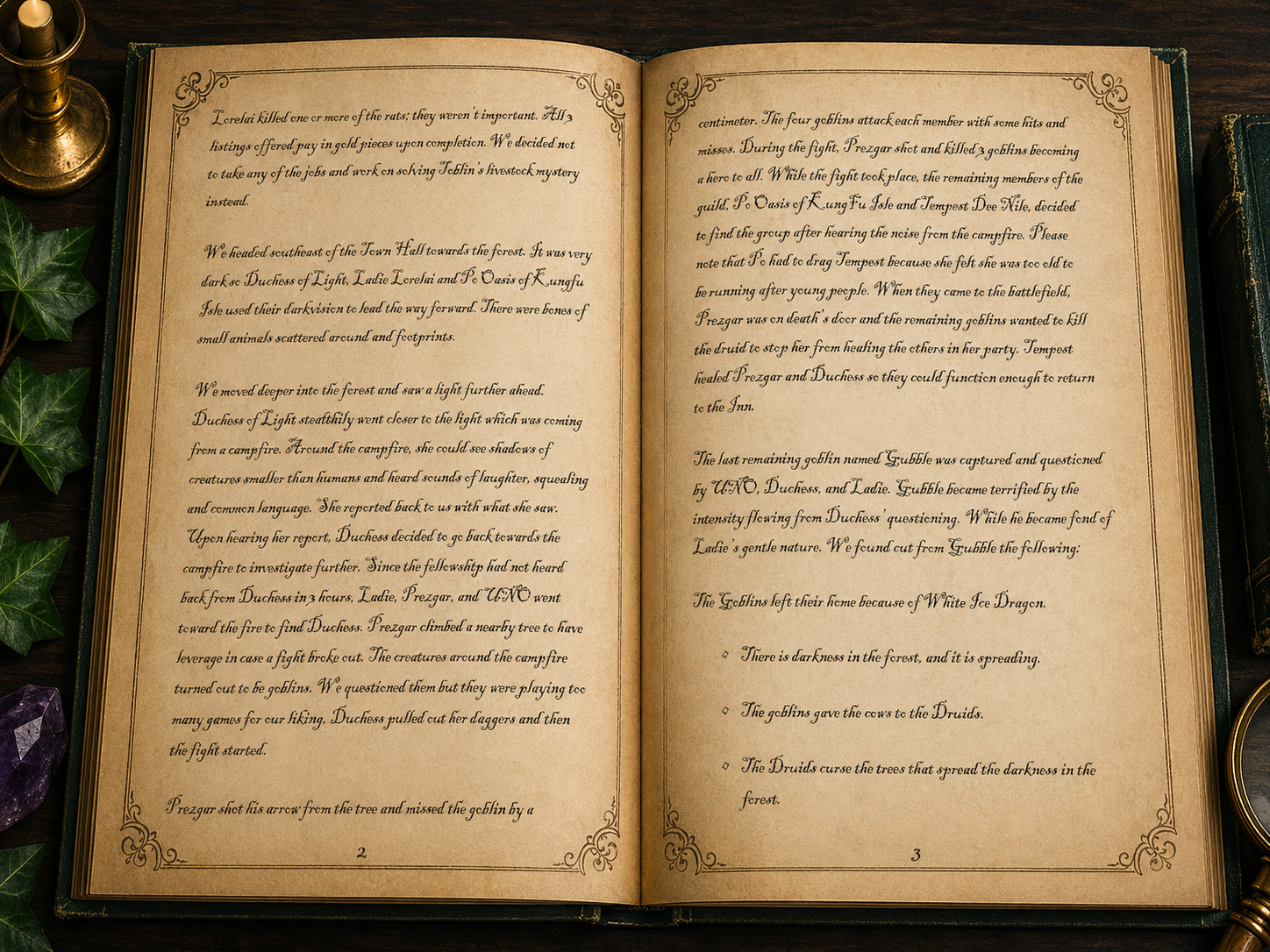
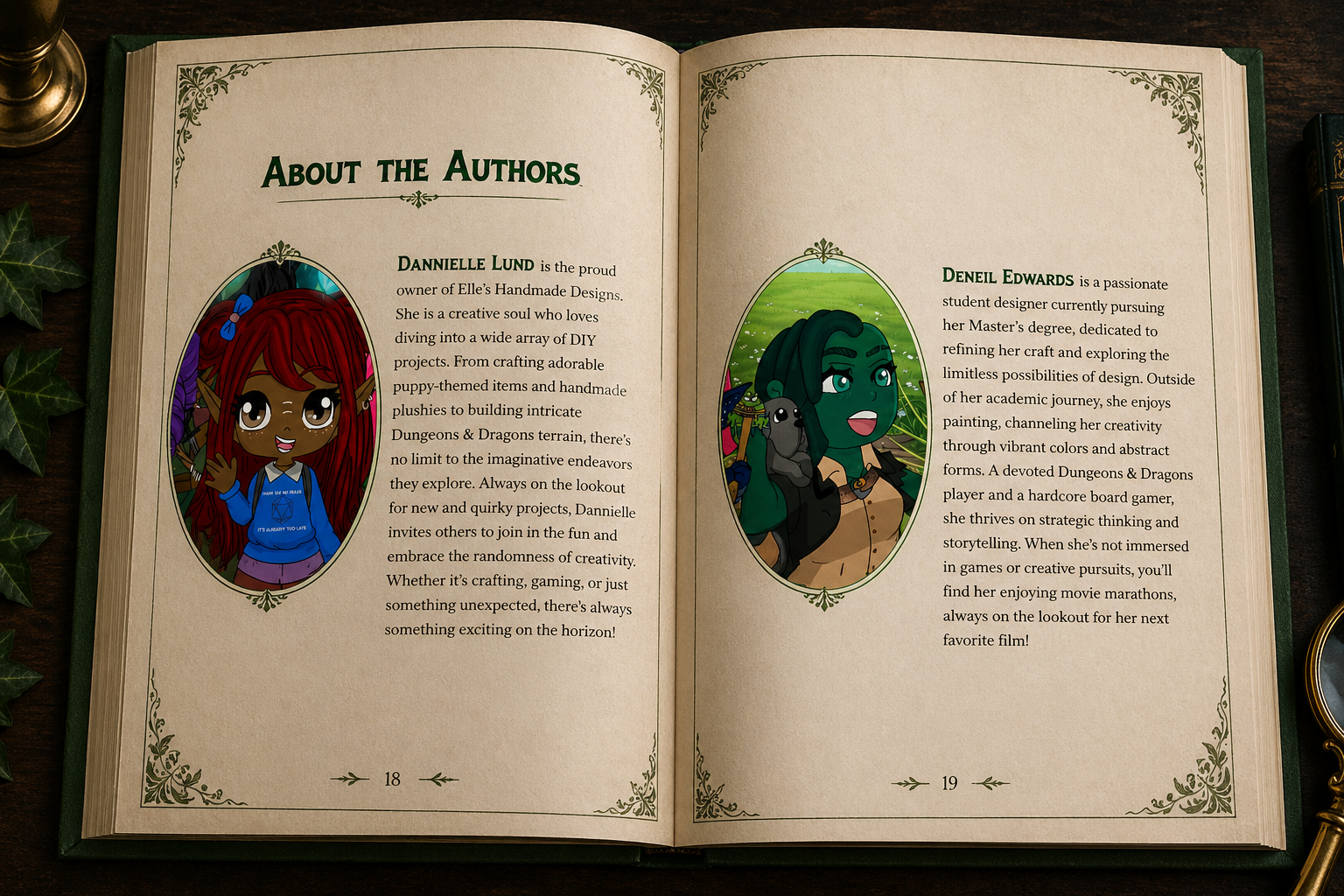
author page
reflection
This project expanded my ability to design for long-form content and narrative experiences. It challenged me to think about how layout, typography, and voice work together to support storytelling.
It also reinforced my interest in creating work that blends design with immersive storytelling and user experience.