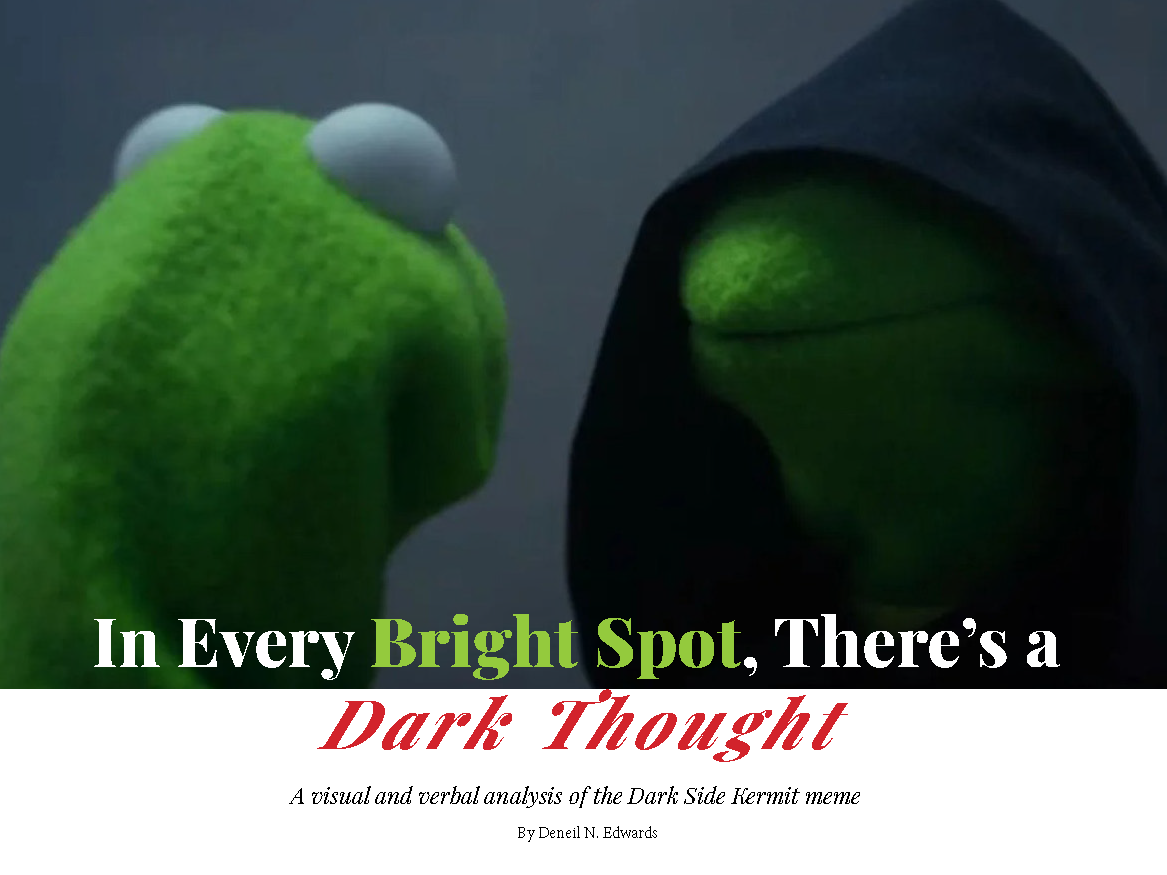
A magazine-style editorial layout that transforms rhetorical analysis into a designed publication using the Dark Side Kermit meme.
Project concept
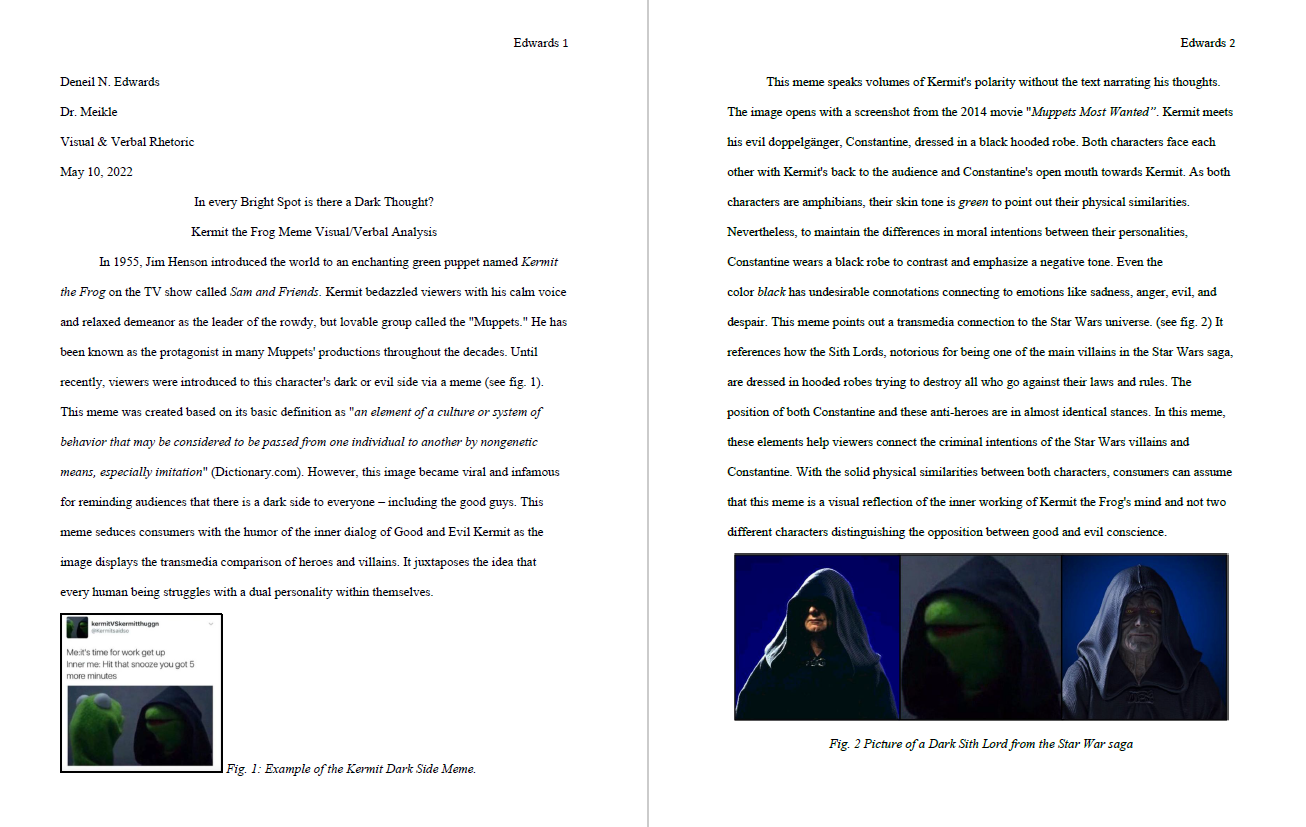
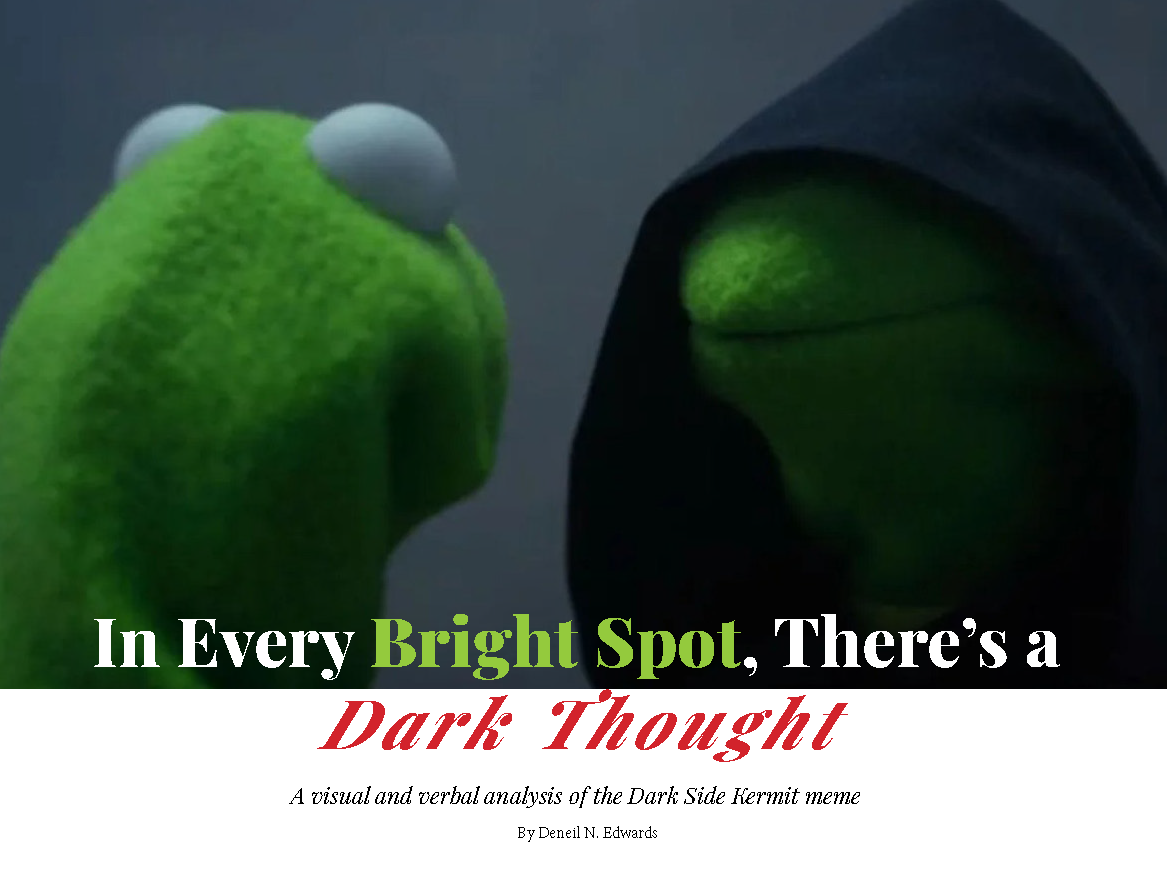
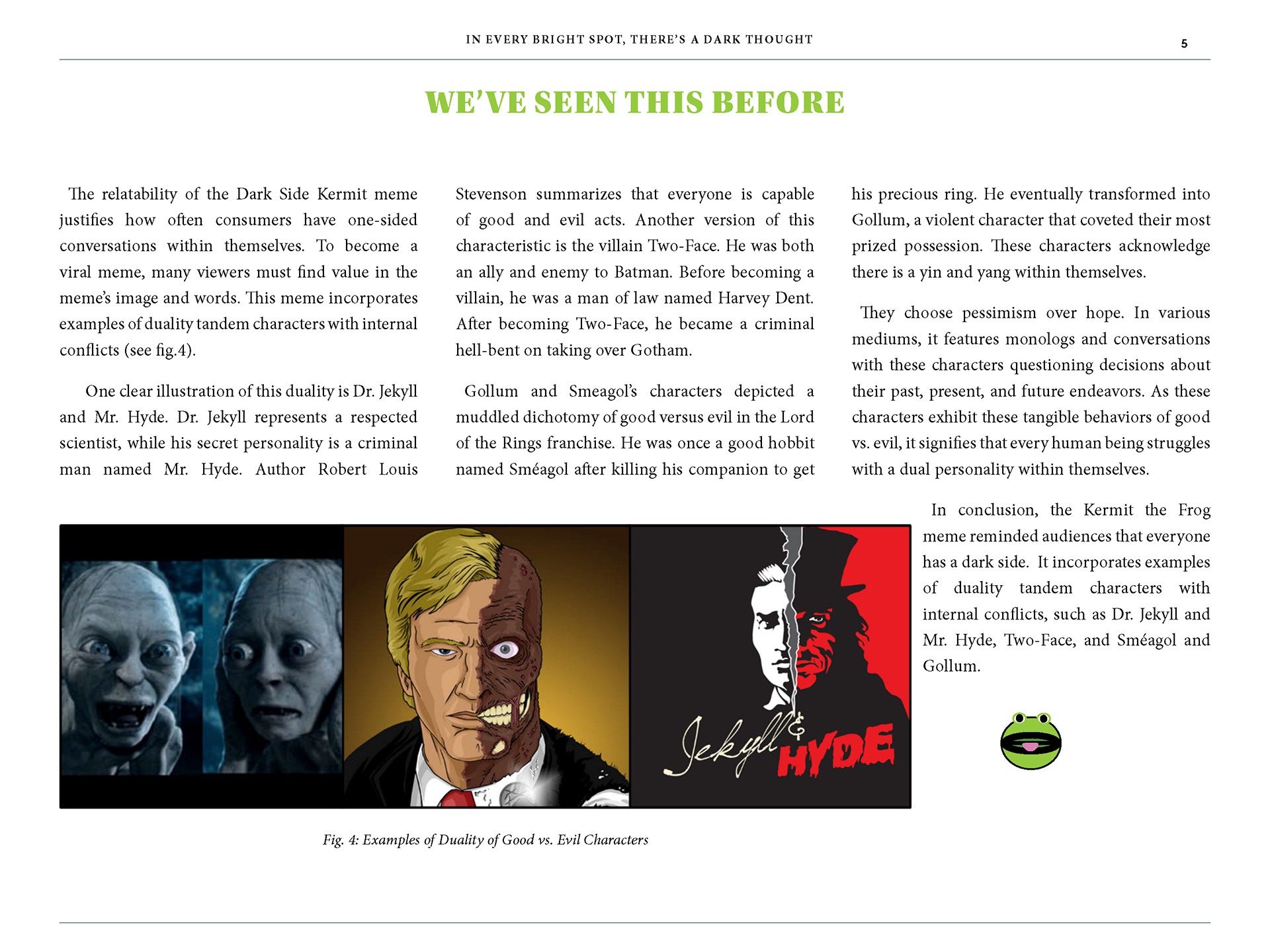
This project began as a thesis-driven visual and verbal rhetoric analysis exploring the duality of good and evil through the “Dark Side Kermit” meme. The original paper examined how imagery and text work together to convey internal conflict, drawing on cultural references such as Star Wars, Dr. Jekyll and Mr. Hyde, and Gollum to reinforce the theme of duality.
Building on this research, I translated the academic essay into a magazine-style layout, transforming dense written content into a visually engaging editorial experience. The goal was to maintain the integrity of the analysis while enhancing readability, hierarchy, and visual storytelling.
Purpose of the Paper
The goal of this paper was to analyze how meaning is constructed when visuals and words interact, and why this combination is so effective in digital culture.
Using the Kermit meme as a case study, I explored how:
- Images can communicate tone and emotion without text
- Text reframes imagery to create humor and relatability
- Memes function as modern storytelling tools that reflect human behavior
- Text reframes imagery to create humor and relatability
- Memes function as modern storytelling tools that reflect human behavior
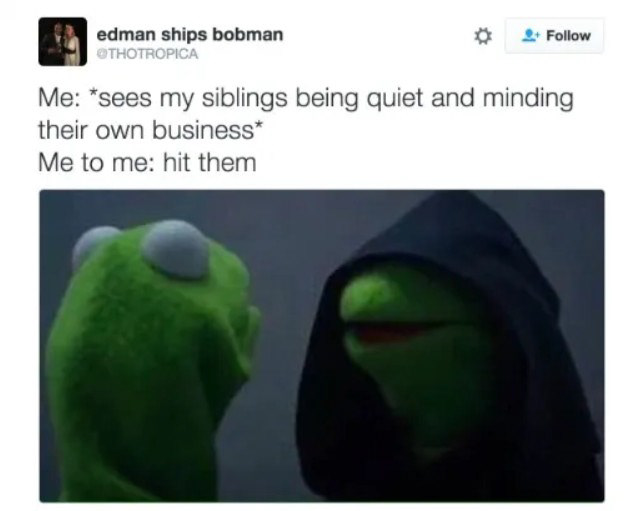
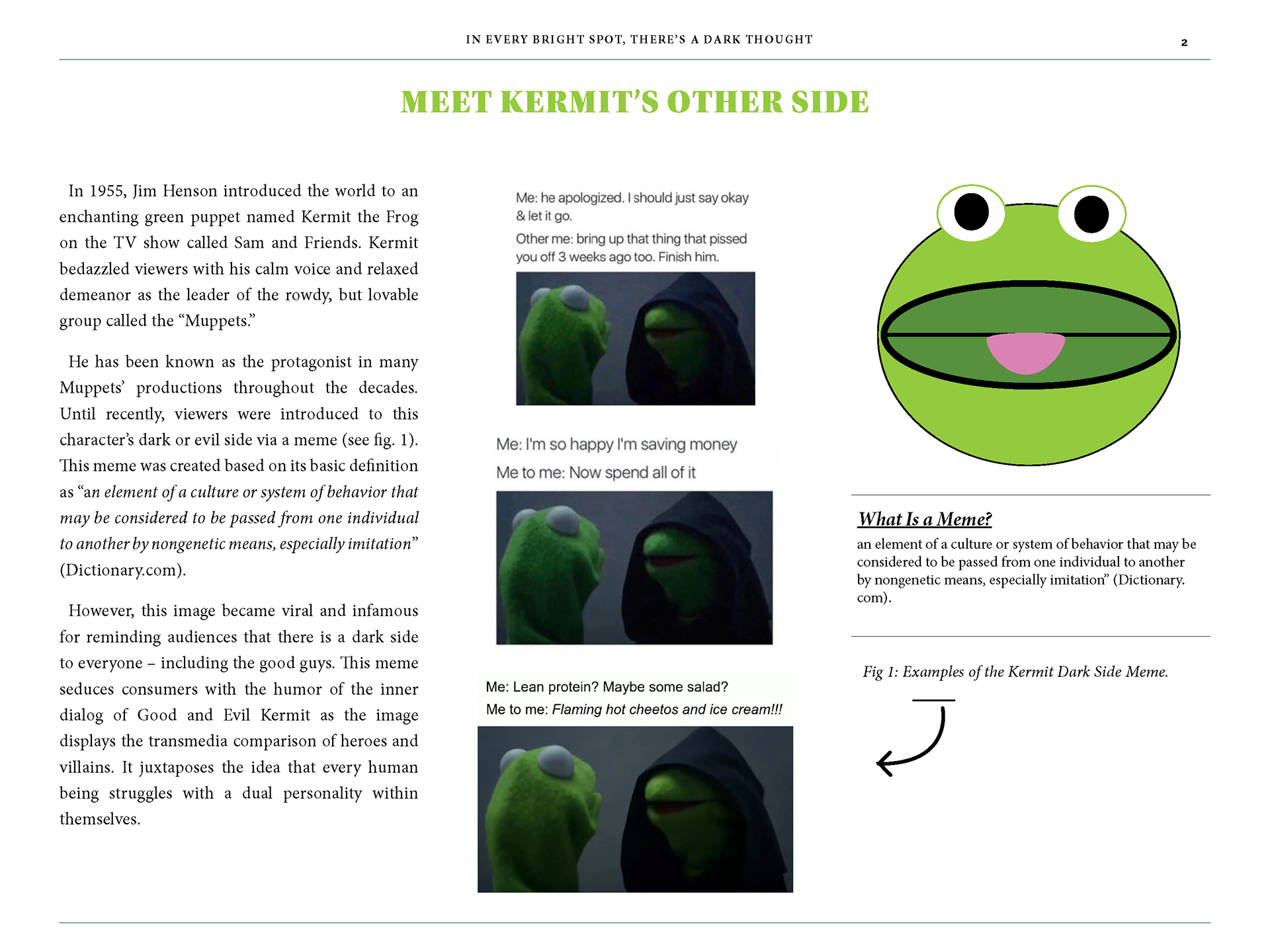
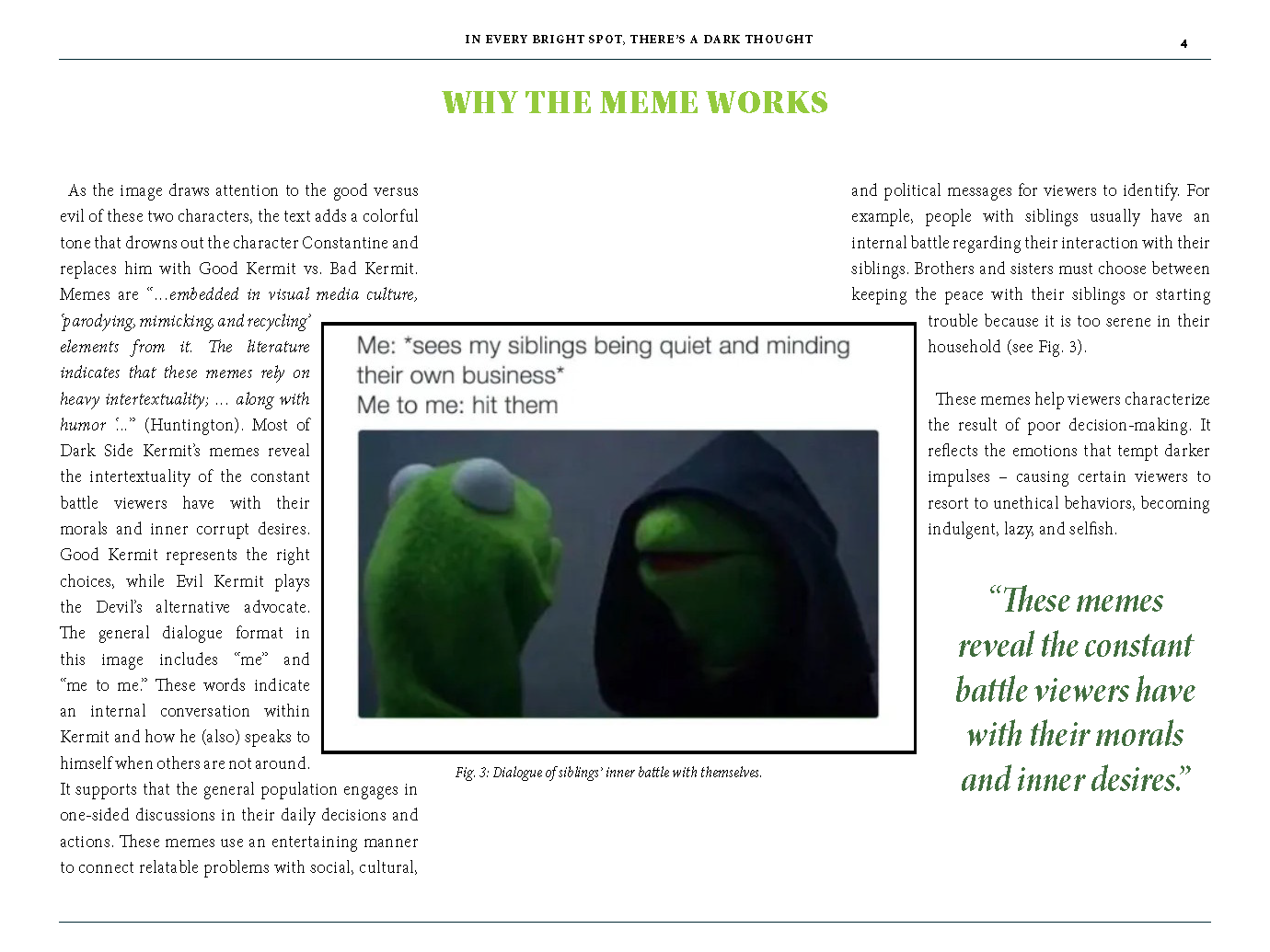
As discussed in the paper, the meme highlights the idea that “everyone has a dark side” and uses internal dialogue (“me” vs. “me to me”) to represent conflicting thoughts and decisions
Research & Analysis Approach
My analysis focused on three key areas:
1. Visual Language
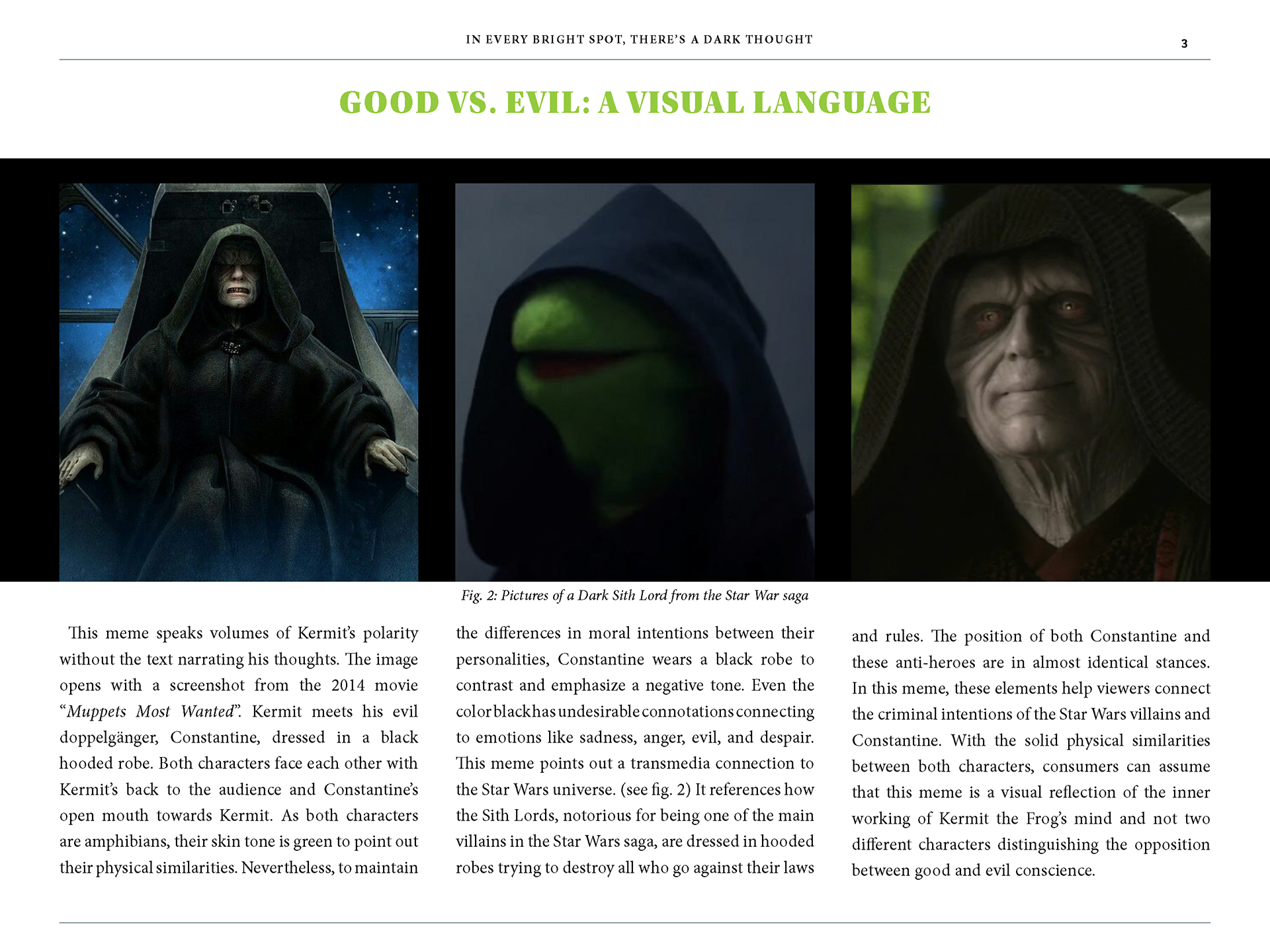
I examined how design elements—such as color, contrast, and character positioning—communicate meaning. For example, the dark-hooded version of Kermit visually evokes villain archetypes, reinforcing negative or impulsive behavior.
I examined how design elements—such as color, contrast, and character positioning—communicate meaning. For example, the dark-hooded version of Kermit visually evokes villain archetypes, reinforcing negative or impulsive behavior.
2. Intertextuality & Cultural References
The meme draws on familiar cultural symbols, such as Sith Lords from Star Wars and dual-identity characters like Dr. Jekyll and Mr. Hyde, to deepen its meaning and make it instantly recognizable to audiences.
The meme draws on familiar cultural symbols, such as Sith Lords from Star Wars and dual-identity characters like Dr. Jekyll and Mr. Hyde, to deepen its meaning and make it instantly recognizable to audiences.
3. Human Behavior & Relatability
I explored how the meme mirrors real-life internal dialogue, showing how people negotiate between right and wrong decisions. This relatability is a key reason the meme resonates and spreads widely.
I explored how the meme mirrors real-life internal dialogue, showing how people negotiate between right and wrong decisions. This relatability is a key reason the meme resonates and spreads widely.
Key Insight
A major takeaway from this project is that visual and verbal elements do not work independently—they rely on each other to create meaning.
- The humor and impact of the Dark Side Kermit meme come from:
- The visual contrast between good and evil
- The textual framing of internal thoughts
The shared cultural understanding between the creator and the audience
Together, these elements transform a simple image into a powerful and widely understood message.
Analysis PAper
From Paper to Presentation
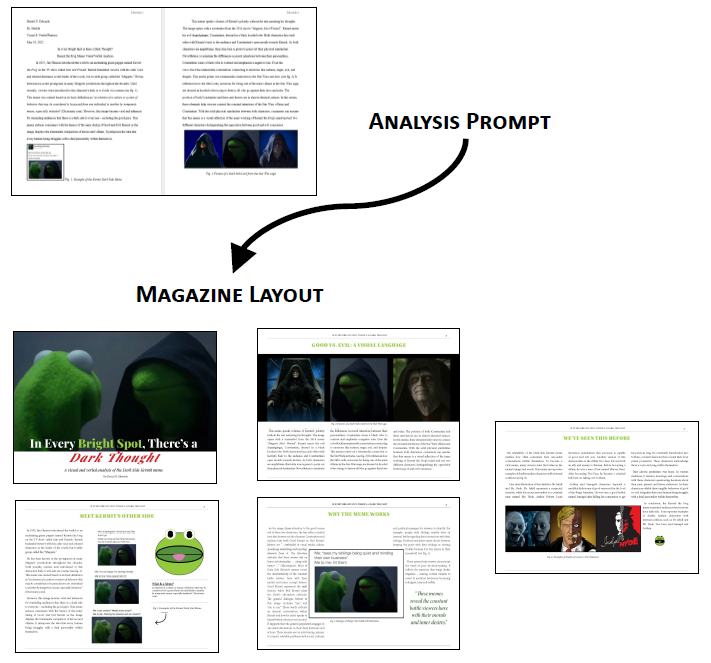
To showcase this analysis in my portfolio, I translated the paper into a magazine-style layout. This step was not about redesigning the concept, but about presenting the research in a more visual and engaging format.
The layout allows viewers to:
- See the examples alongside the analysis
- Experience the visual/verbal relationship in context
- Engage with the content in a way that reflects how memes exist in real life
Concept & Strategy
The central concept of the project is duality—the coexistence of opposing forces within a single identity. This idea guided both the writing and the visual design.
In the layout:
- Light vs. dark color contrasts reinforce moral tension
- Image placement mirrors confrontation (e.g., Kermit vs. shadow self)
- Typography shifts help distinguish tone and emphasis
The magazine format allowed the analysis to feel more immersive, reflecting how memes function within visual culture rather than as static text.
Visual & Layout Decisions
Grid System: Structured columns to mimic editorial publications while allowing flexibility for images
Typography: A combination of serif body text for readability and bold display fonts for section headers
Color Use: Strategic use of green, black, and white to echo Kermit’s identity and the “dark side” theme
Image Integration: Screenshots and references placed alongside analysis to support key arguments (e.g., meme examples and visual comparisons on pages 2–3)
Final Result
The final outcome of this project is a completed visual and verbal analysis examining how the “Dark Side Kermit” meme communicates internal conflict through the interplay of imagery and text. The paper successfully presents a clear thesis supported by cultural references, visual examples, and rhetorical analysis.
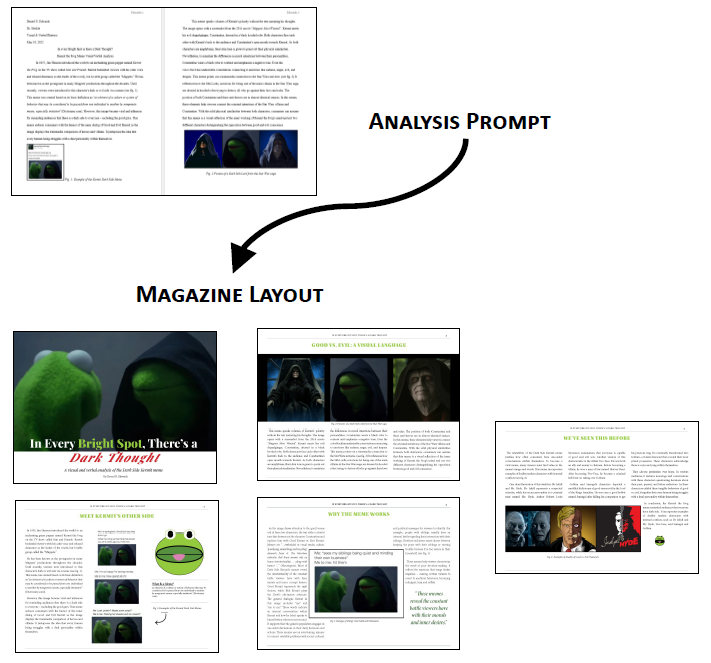
To enhance the work's presentation, I translated the paper into a magazine-style layout for my portfolio. This format allows the analysis to be viewed alongside its visual references, making the relationship between words and images more immediate and engaging. Rather than functioning as a redesign, the layout serves as a presentation tool that brings the research to life and reflects how memes exist within visual culture.
Overall, the final result demonstrates both my ability to analyze visual communication critically and to present complex ideas in a clear, visually accessible way.
Final Result GALLERY
reflection
This project challenged me to think beyond design as aesthetics and focus on how meaning is created. Through analyzing the Dark Side Kermit meme, I gained a deeper understanding of how visual and verbal elements rely on each other to communicate tone, humor, and relatability.
One of the biggest takeaways was recognizing the power of cultural references and shared knowledge in design. The meme’s effectiveness comes not just from its visuals or text alone, but from how audiences interpret them together, drawing on familiar narratives of good versus evil.
Translating the paper into a magazine layout also reinforced the importance of presentation in communication. While the core content remained the same, the visual format made the analysis more engaging and easier to navigate, showing how design can enhance understanding without altering meaning.
If I were to continue developing this project, I would explore incorporating more comparative examples of memes or expanding the analysis into other forms of mixed media. This would further strengthen the discussion around how visual culture shapes communication in digital spaces.